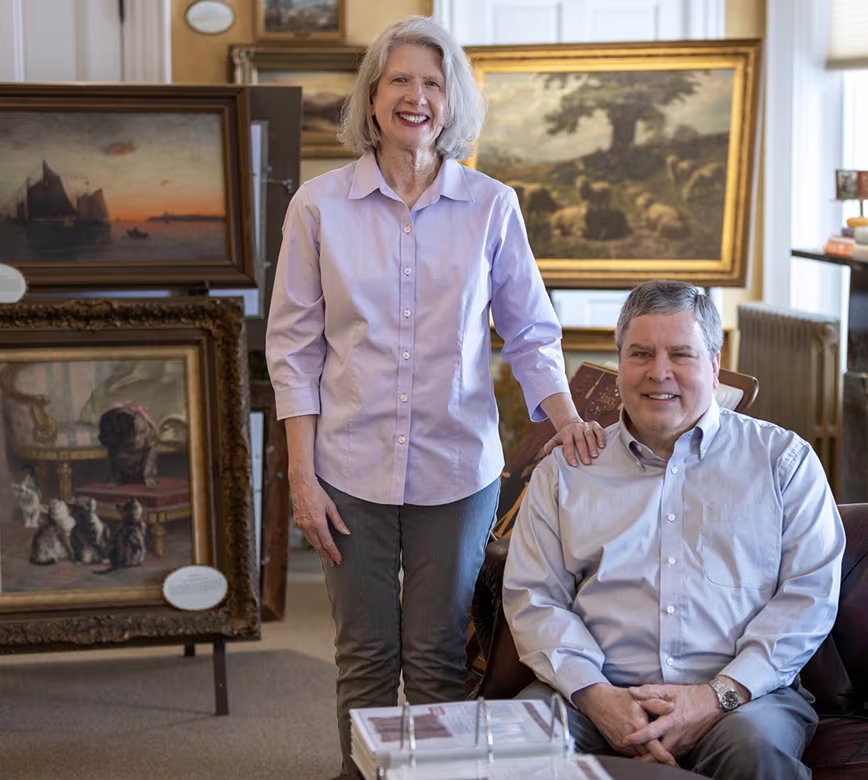
By Jerry and Joan Hawk, owners of Bedford Fine Art Gallery
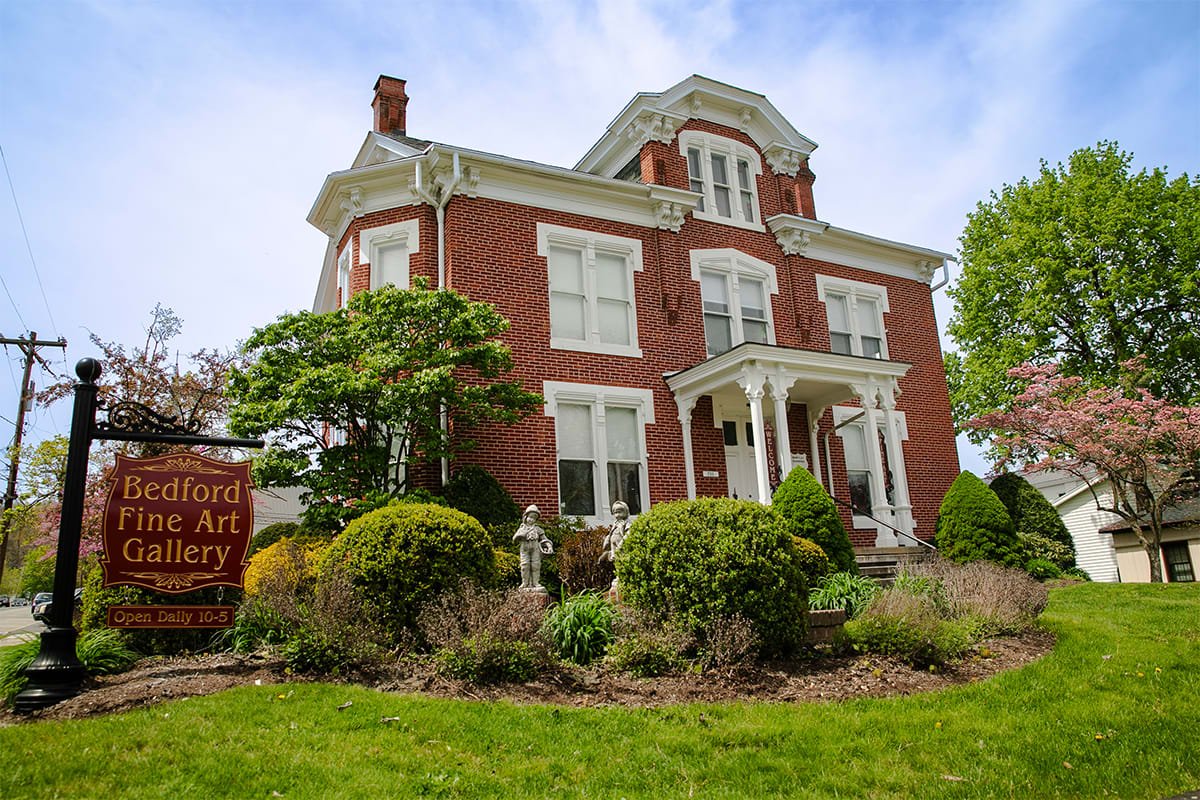
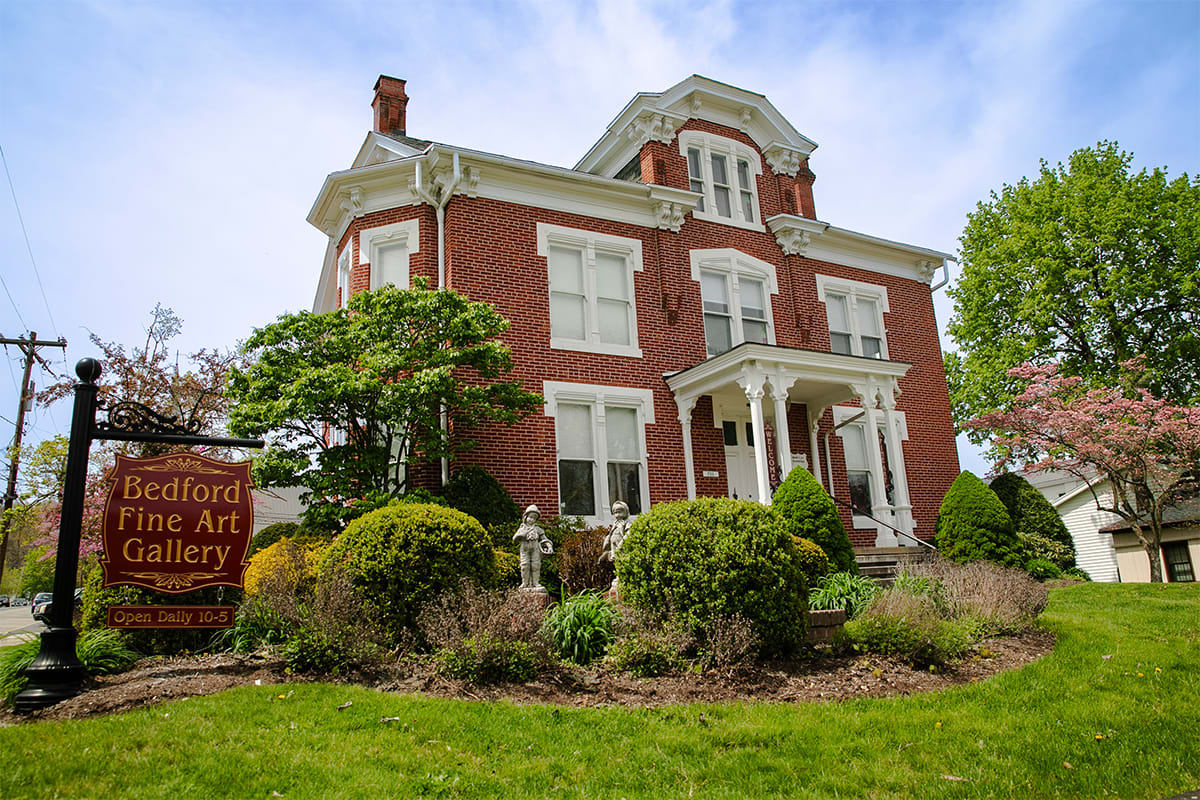
We've spent more than 40 years collecting original Victorian décor and fine art — first as a hobby, then as the driving purpose behind restoring our own home, an 1889 house listed on the National Register of Historic Places. Along the way we opened Bedford Fine Art Gallery in Bedford, Pennsylvania, where we specialize in original 19th-century paintings and works on paper for people decorating Victorian and Victorian-era homes.
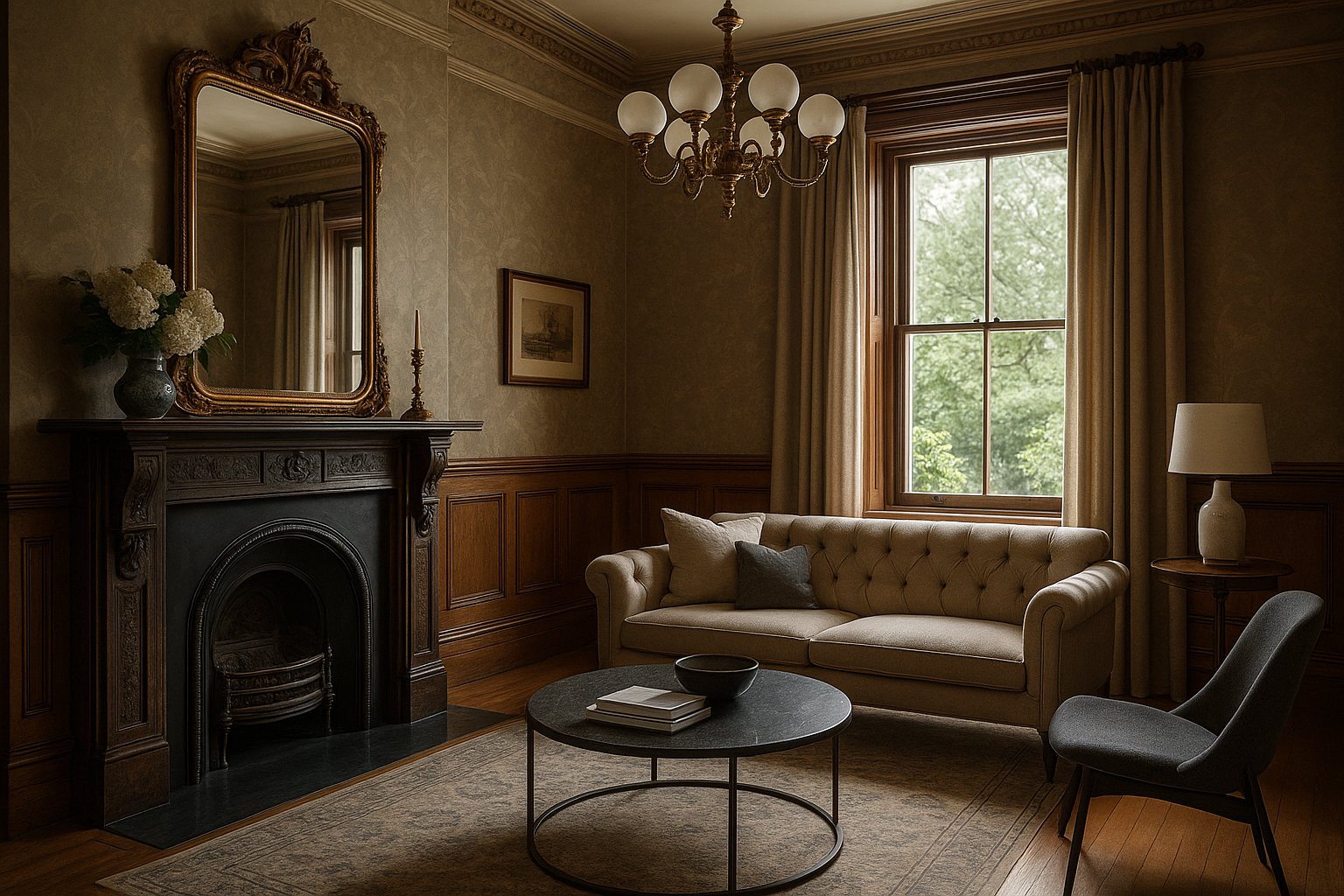
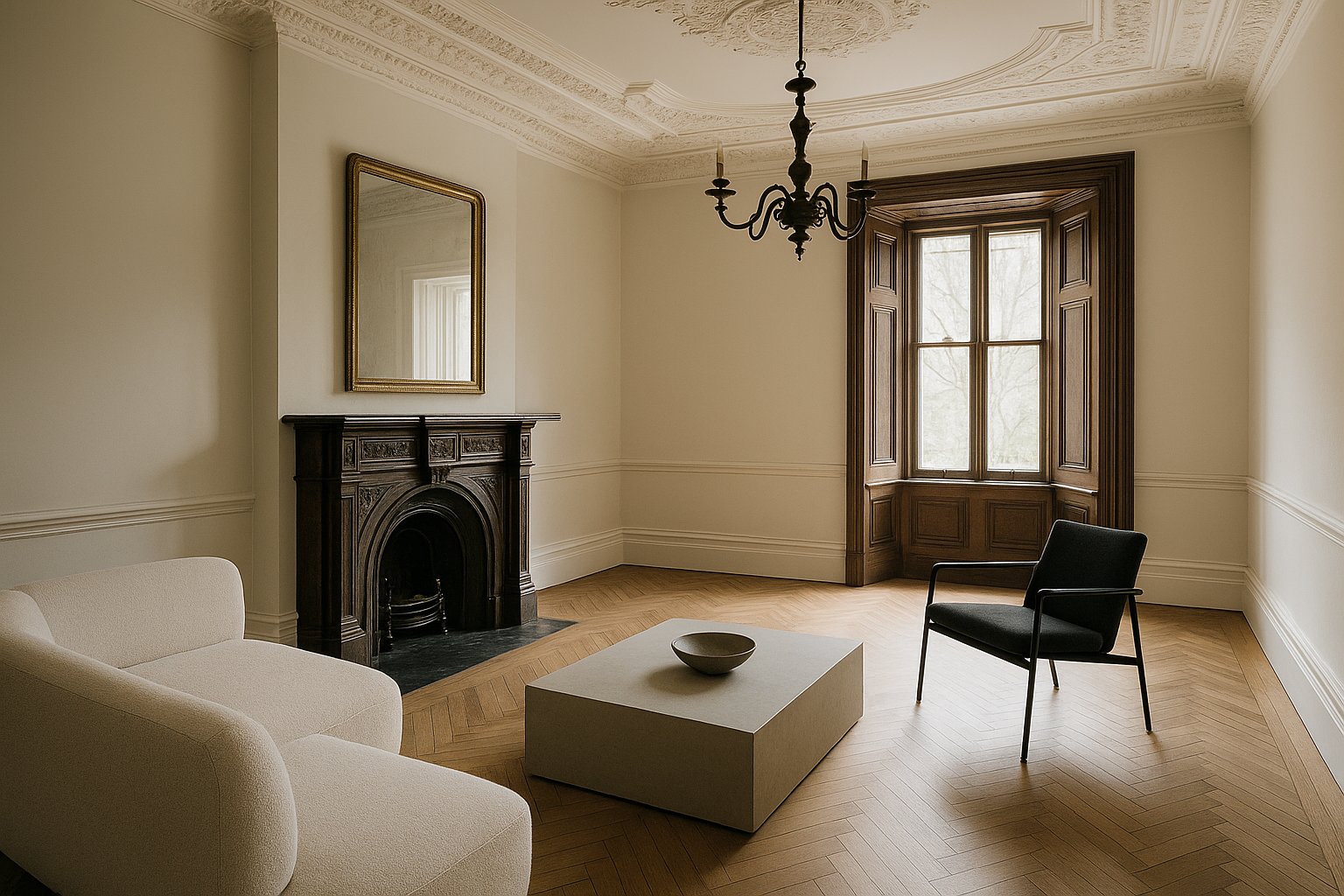
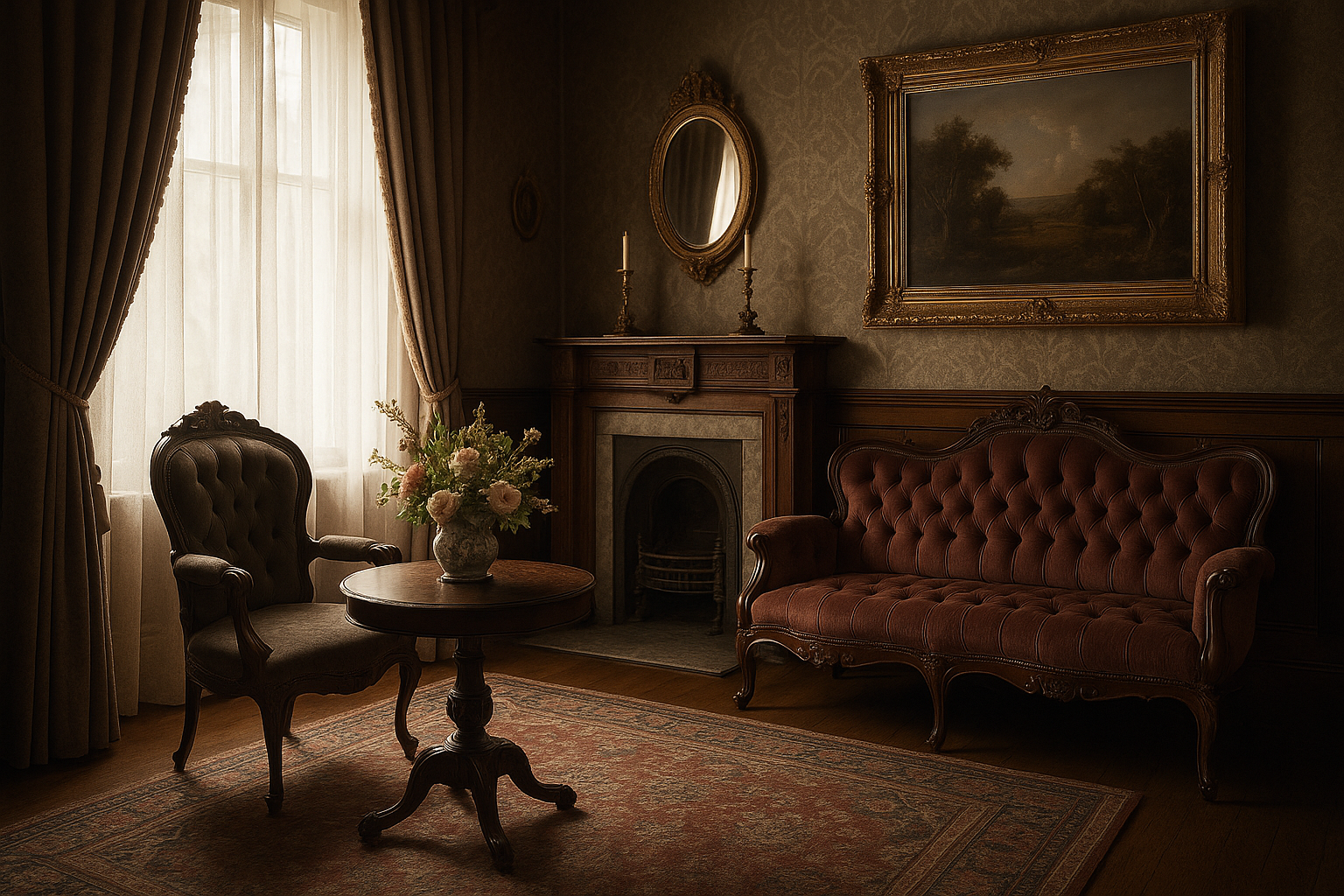
This guide pulls together everything we wish someone had handed us when we started: how to choose an authentic Victorian color palette, how to read wallpaper and pattern the way the Victorians did, how to furnish and finish every major room of the house, and — the piece almost every restoration skips — how original Victorian fine art is what actually makes a house read as Victorian rather than just old.
If you own a Victorian home, are restoring one, or simply love the period, treat this as a working reference. Bookmark it, come back to it room by room, and use the glossary links throughout to go deeper on any single topic.
What Actually Makes a Room "Victorian"?
The word "Victorian" covers a lot of ground — Queen Victoria's reign ran from 1837 to 1901, and decorating fashion shifted considerably within it, from the restrained early period through the exuberant High Victorian era to the lighter, more Aesthetic and Arts-and-Crafts-influenced late Victorian years. A house built in 1860 and one built in 1895 will not want the same palette, pattern scale, or furniture silhouette, even though both get filed under "Victorian."
The throughline across all of it is a horror of empty space. Victorians layered pattern on pattern, filled walls with art and shelving with objects, and treated a bare wall or an unfurnished corner as a decorating failure rather than a design choice. Understanding that instinct — abundance, layering, and narrative detail — will do more for an authentic result than any single paint color or fabric ever will.
Victorian Color Palettes, Era by Era
Early Victorian (1837–1860)
Early Victorian rooms favored softer, more muted colors than people usually expect — dusty rose, sage, soft gold, and pale blue-grays, often set off with white or cream trim. This was still a transition out of the restraint of the Regency period.
High Victorian (1860–1880)
This is the period most people picture when they think "Victorian": saturated, jewel-toned colors — deep burgundy, forest and hunter green, plum, gold ochre, and Prussian blue — frequently combined three and four colors deep on a single wall using a dado (lower wall), fill (middle wall), and frieze (upper wall) treatment.
Late Victorian / Aesthetic Movement (1880–1901)
Late Victorian and Aesthetic Movement interiors lightened and sophisticated the palette — sage and olive greens, dusty terracotta, mustard, and soft blues, influenced by Japanese design and the work of designers like Christopher Dresser. Gilding remained, but color became more tonal and less contrasting.
A period-accurate rule of thumb: the closer to eye level, the darker and richer the color, echoing the way Victorians layered dado, fill, and frieze on their walls.
Victorian Wallpaper, Pattern, and Texture
Wallpaper is arguably the single most recognizable signature of Victorian decorating, and it is worth getting right. A few guiding principles:
Scale matters more than motif. Large-scale florals, damasks, and acanthus patterns suit high-ceilinged rooms; smaller repeats suit hallways, bedrooms, and lower-ceilinged spaces.
Layer, don't isolate. Victorians commonly combined a patterned fill paper with a separate frieze paper and a contrasting or embossed dado — three patterns working together, not one paper doing all the work.
Texture reads as important as color. Anaglypta and Lincrusta embossed papers, often painted rather than left plain, added dimensionality that flat modern wallpaper doesn't replicate.
Look to William Morris and his contemporaries for pattern logic even if you don't use his specific designs — dense, naturalistic, repeating botanical motifs are the throughline of the era's best patterns.
We go deeper on specific period-accurate patterns and where to source reproduction papers in our companion article on Victorian wallpaper.
Victorian Furniture
Victorian furniture is not one look — it moved through Gothic Revival, Rococo Revival, Renaissance Revival, Eastlake, and Aesthetic Movement styles over the course of the era — but a few threads run through most of it:
Dark, dense hardwoods — walnut, rosewood, and mahogany dominate, generally with a high-gloss French polish finish.
Curves and carving in earlier decades, straighter lines later. Rococo Revival's serpentine crest rails and cabriole legs give way by the 1870s–80s to the more rectilinear, incised-line look associated with Charles Eastlake.
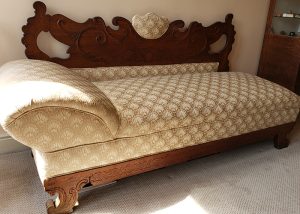
Upholstery followed the "more is more" instinct — deep-buttoned tufting, fringe, tassels, and horsehair stuffing on parlor suites in particular.
Purpose-built pieces for social ritual — calling-card trays, tea tables, fainting couches, and dedicated writing desks reflect how formalized Victorian domestic life was.
When shopping, condition and originality matter more than perfection — a piece with its original finish, hardware, and upholstery frame (even if the fabric itself has been redone) is generally worth more, and looks more authentic, than an over-restored equivalent.
Victorian Woodwork and Architectural Detail
Original woodwork is one of the most valuable things a Victorian home can retain, and one of the most damaging to lose. Deep baseboards, picture rails, ceiling medallions, pocket doors, and turned staircase balusters are all load-bearing to the room's character even though none of them are structural.
If you're working with painted-over original woodwork, stripping back to the original wood (where it's sound) generally reads more authentic than a repaint, though many Victorian interiors were in fact painted, grained, or ebonized rather than left natural — so "strip everything to bare wood" is not automatically the historically accurate choice for every house. Research your home's specific era and region before assuming.
The picture rail deserves special mention, because it is directly tied to how Victorians displayed art — a subject we come back to below.
Victorian Wall and Floor Coverings
Beyond wallpaper, Victorian floors carried as much pattern as the walls. Encaustic and geometric tile in entries and vestibules, patterned Brussels or Wilton carpet (often wall-to-wall, unlike the bare or lightly-rugged floors of earlier periods), and painted or stenciled floorcloths in less formal rooms were all common. Parquet borders around a central carpet were a High Victorian favorite in formal rooms.
Victorian Windows and Window Treatments
Victorian windows were rarely left bare. A fully dressed Victorian window could layer several elements: sheer under-curtains for privacy and light control, heavier over-drapes in a rich fabric, and a decorative valance or lambrequin to finish the top, often with fringe, tassels, or tiebacks. Stained and leaded glass transoms and sidelights were common in entries and stairwells, and etched or frosted glass appeared in bathrooms and doors requiring privacy.
Victorian Tileworks
Tile went far beyond the bathroom in a Victorian home. Encaustic tile (with the pattern built into the clay itself, not just glazed on top) was used at entries and vestibules; fireplace surrounds frequently used hand-painted or transfer-printed tile, often in sets that told a small visual story across the surround; and hearths, wainscoting in butler's pantries, and even exterior porch floors could carry period tile patterns.
Victorian Horticulture and the Conservatory
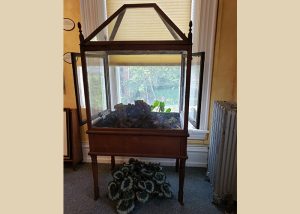
Plants were treated as a decorating material in Victorian homes, not an afterthought. The Wardian case — a sealed glass terrarium invented in the 1830s — made it possible to keep delicate ferns and orchids alive indoors for the first time, and became a fixture of the well-appointed Victorian parlor. Larger homes built dedicated conservatories, filled with palms, ferns, and exotic specimens gathered through the era's enthusiasm for plant collecting and empire-era botany.
A Room-by-Room Guide to Victorian Decorating
The Drawing Room (Parlor)
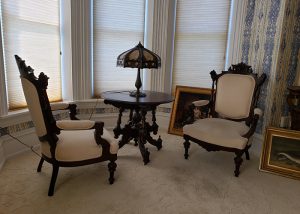
The formal reception room of the house, reserved for guests and best furniture — typically the richest color, the most elaborate upholstery, and the focal point for the family's best art and objects.
The Dining Room
Darker, more masculine color and heavier woodwork than the parlor was typical, built around a large table, a sideboard for display, and — frequently — a dedicated wall for framed art positioned to be seen from the table.
The Bedroom
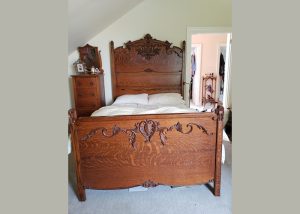
Somewhat lighter and more personal in palette than public rooms, centered on a substantial bed (often walnut or mahogany), a marble-top washstand or dresser predating indoor plumbing, and smaller-scale, more intimate artwork.
The Library
Dark woodwork, built-in or freestanding bookcases, a substantial desk, and typically the room where a family's most serious art — portraits, landscapes — was concentrated, alongside books.
The Sitting Room
A more informal, everyday family gathering space than the drawing room, often where needlework, letter-writing, and daily life actually happened, decorated a notch less formally than the parlor.
The Sewing Room
A working room, but rarely left undecorated — Victorians still hung prints or family photographs even in utilitarian spaces, reinforcing how thoroughly art-filled these homes were, room to room.
The Music Room and Art Gallery
In grander homes, music rooms were sometimes combined with a dedicated gallery for the family's art collection — a tradition we discuss in detail in the next section, because it's directly relevant to how you should be thinking about your own walls.
The Hallway and Stairway
Often where smaller, informal "art units" were grouped — a cluster of prints or family images over a console table, illuminated by a single fixture, both decorative and practical for a home lit by gas or early electricity.
The Kitchen and Bathroom
The two rooms that changed most across the Victorian era as plumbing and gas (then electric) service became standard — tile, marble, and painted or stenciled woodwork are the most period-appropriate updating choices here, since most original Victorian kitchens and bathrooms don't survive intact.
Porches and Gardens
The Victorian porch functioned as an outdoor room, often furnished nearly as deliberately as an interior one, with wicker or painted furniture, hanging ferns, and decorative millwork (gingerbread trim, turned posts, brackets).
The One Thing Most Restorations Are Missing: Original Victorian Fine Art
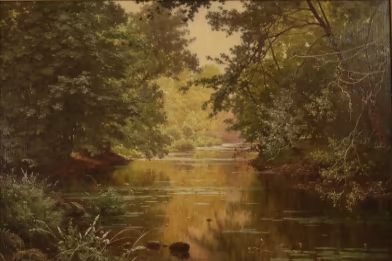
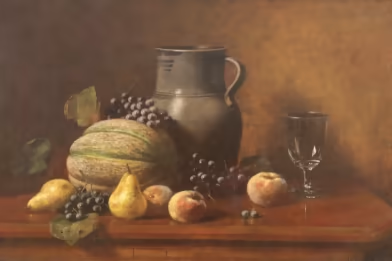
Here is the honest truth after 40 years of doing this: you can get the color, the wallpaper, the furniture, the woodwork, and every room in this guide exactly right — and your home will still read as "old house" instead of "Victorian home" if the walls are bare, or filled with reproductions and decorative prints instead of real period art.
Harriet Beecher Stowe, writing about home decoration in 1864, put it about as plainly as it can be put: "Everything depends on the picture." Oscar Wilde, on his American lecture tour, made a related point when he talked about hanging pictures where they could actually be examined and appreciated — not as wallpaper, but as objects meant to be looked at closely.
That's the piece we think gets skipped most often, and it's the reason we started Bedford Fine Art Gallery in the first place.
Why Art, Specifically Original Art, Matters So Much
Serious art collecting became a genuine Victorian institution in its own right — as newly wealthy Victorians became patrons and collectors, many devoted an entire room in the house to displaying what they'd acquired, sometimes combined with the music room, sometimes with the ballroom. These galleries tended to share a look: crystal chandeliers overhead, gilded seating along the walls, and paintings hung "salon style" — massively framed, stacked closely together from roughly dado height up to the ceiling cornice, with barely a gap between them.
That salon-style hanging grew directly out of a practical Victorian innovation: the picture rail. Once plaster walls replaced the wood paneling of the 18th century, homeowners needed a way to hang art without repeatedly damaging the plaster, and the picture rail — a molded strip near the ceiling or bordering the frieze, from which pictures hung on visible wire — solved it. It let a family rearrange height, spacing, and grouping constantly without a single new nail hole, and Victorians used that flexibility to the fullest, hanging work unusually high to make use of their tall ceilings, tilting the upper rows forward slightly so the brushwork and perspective read correctly from below. Even middle-class homes without a dedicated gallery room built smaller "art units" — a grouping of prints, watercolors, or family portraits over a table in a hallway or stair corner, arranged so a single lamp could light the whole cluster at once.
The point of all of it, gallery-scale or hallway-scale, was the same: original art wasn't decoration added after the room was finished. It was treated as the finishing layer that made everything else — the color, the pattern, the furniture — cohere into a Victorian room rather than just a well-furnished one.
This is precisely what we've built our own home and our gallery around. Every room in our 1889 house includes original period art, hung the way our sources describe — grouped, layered, at a scale that suits the room, not scattered single prints bought to match a color scheme. If you've done the work of restoring your color, your wallpaper, your furniture, and your woodwork, original Victorian fine art is the single highest-impact thing left to add — and it's the one thing most decorating guides don't mention at all, because most of them aren't written by people who deal in the art itself.
Where to Source Authentic Victorian Antiques and Art
A few honest, practical notes from four decades of doing this:
Original condition beats "restored to perfect." A piece with its original finish and minor wear is usually more valuable, and more convincing in a period room, than one that's been stripped and refinished to look new.
Provenance and dating matter for art specifically. Know roughly when and where a painting was made before you buy — regional and period differences affect both authenticity and value.
Reputable specialty dealers are worth the premium over unverified online marketplace listings, particularly for furniture and art. We've had good experiences over the years with established period-furniture dealers such as Bargain John's Antiques in Lexington, Nebraska, for case pieces and smaller furnishings.
For original Victorian fine art specifically, that's our own specialty at Bedford Fine Art Gallery — it's the whole reason the gallery exists.
Common Mistakes When Decorating a Victorian Home
Treating "Victorian" as one single look instead of matching your home's actual build date to the right sub-period palette and furniture style.
Over-restoring surfaces — stripping every painted or grained wood surface to bare wood when the original treatment may have been painted or ebonized.
Leaving walls bare, or filling them with modern decorative prints instead of original period art, which undercuts everything else in the room.
Choosing wallpaper scale that doesn't match the room — oversized pattern in a low-ceilinged room, or an undersized pattern lost in a formal, high-ceilinged one.
Skipping the picture rail when doing a woodwork restoration, even though it's one of the most functionally and historically important details in the house.
Frequently Asked Questions
What colors are most authentic for Victorian home decor? It depends on your home's specific build date. Early Victorian favors muted tones like dusty rose and sage; High Victorian favors saturated jewel tones like burgundy and forest green; Late Victorian and Aesthetic Movement interiors lean toward tonal sage, olive, and terracotta.
Is Victorian wallpaper still made today? Yes — several specialty manufacturers still produce historically accurate reproduction Victorian wallpaper, including embossed Anaglypta and Lincrusta styles, based on period pattern books.
What is a picture rail, and do I need one? A picture rail is a molded strip near the ceiling or frieze line that Victorian homeowners hung art from using wire, without putting holes in the plaster. If your home has one, keep it — it's both historically significant and genuinely useful for displaying art without wall damage.
Why does original art matter more than reproductions for a Victorian home? Victorians collected and displayed art as seriously as they chose furniture or wallpaper, often dedicating entire rooms to it. Original period pieces carry the age, materials, and provenance that reproductions can't replicate, and they were historically the finishing element that pulled a Victorian room together.
Where can I see an example of a fully restored Victorian interior with original art? Our own home — an 1889 house on the National Register of Historic Places — is decorated this way throughout, and we share specific rooms, sources, and details on victorianhomedecor.com.
Our Sources and Further Reading
This guide draws on our own 40 years of restoration and collecting experience, cross-checked against these period-decorating references, which we recommend to anyone going deeper on Victorian interiors:
Winkler, Gail Caskey, and Roger W. Moss. Victorian Interior Decoration: American Interiors, 1830–1900. 1986.
Leopold, Allison Kyle (photography by Elizabeth Heyert). Victorian Splendor: Re-Creating America's 19th-Century Interiors. 1986.
Miller, Judith and Martin (photography by James Merrell). Victorian Style. 1993.
Gay, Cheri Y. Victorian Style: Classic Homes of North America. 2002.
Jerry and Joan Hawk own Bedford Fine Art Gallery in Bedford, Pennsylvania, and have spent 40 years collecting Victorian antiques and fine art, including for their own 1889 home on the National Register of Historic Places. Explore more Victorian decorating guides at victorianhomedecor.com, or original 19th-century art at bedfordfineartgallery.com.