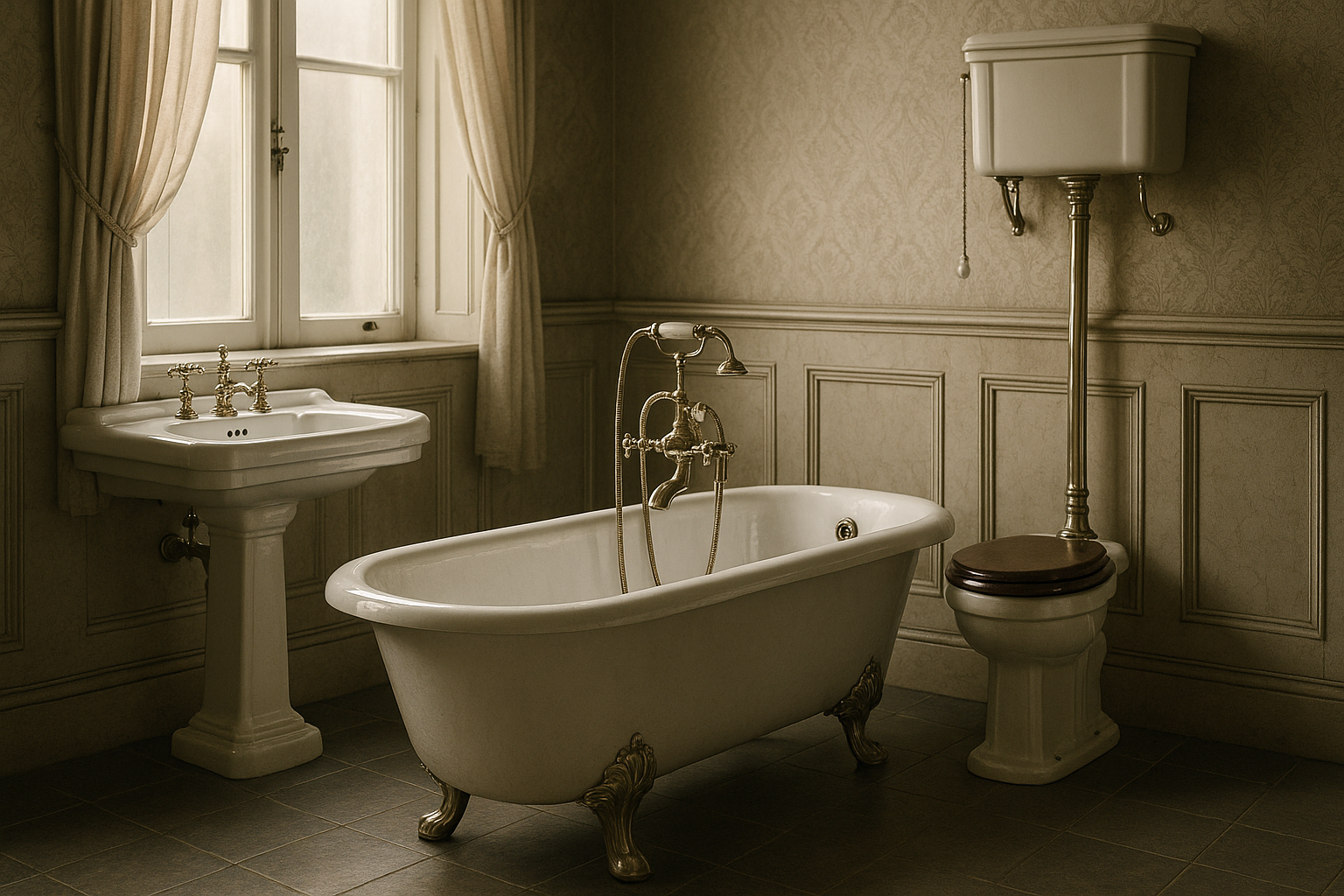
Most articles about Victorian bathroom fixtures are written by people who have never stood barefoot on a cold tile floor at six in the morning, reaching up to pull a porcelain chain above their head to flush a century-old toilet. We have. Every single day.
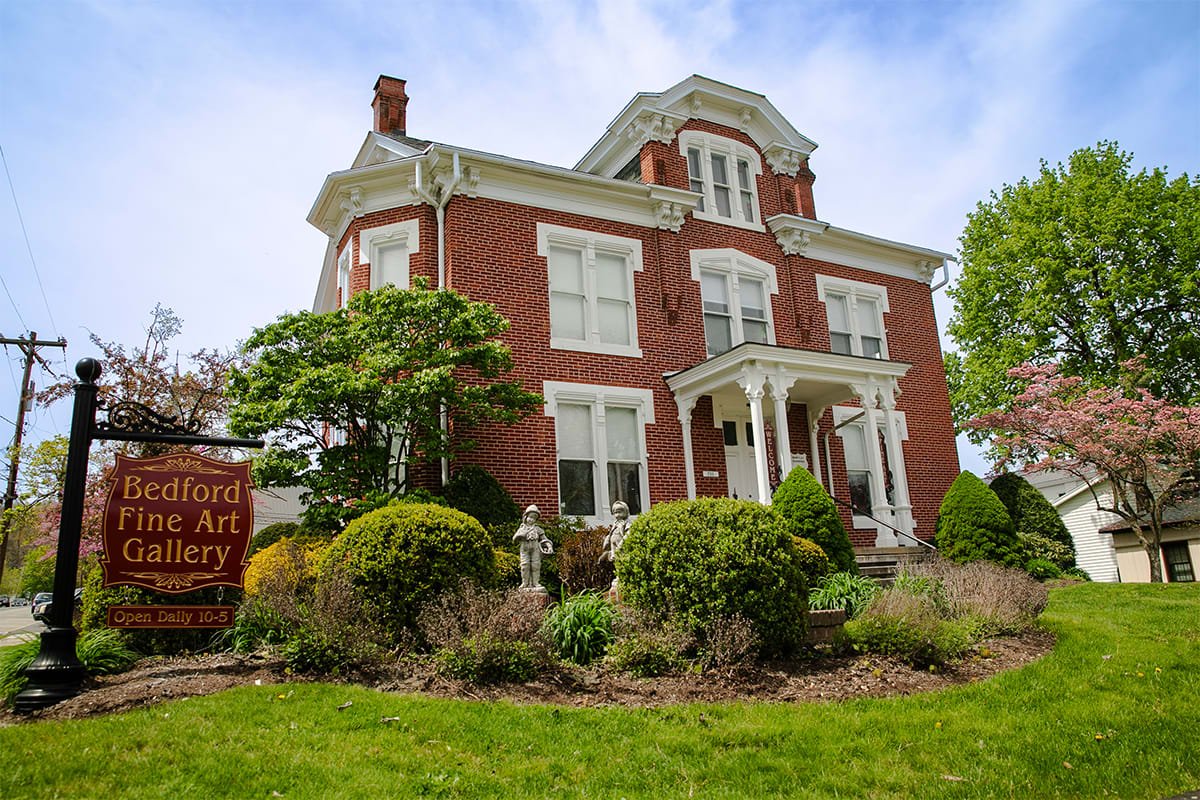
We're Jerry and Joan Hawk, and our 1889 Italianate home in Bedford, Pennsylvania — the Barclay House, listed on the National Register of Historic Places since 1978 — has two of the most authentic Victorian bathrooms you will find still in daily use in the United States. Original high-tank pull-chain toilets. Original clawfoot tubs. Original pedestal and marble console sinks. Original exposed-plumbing shower fixtures with cross-handle valves. Original medicine cabinets. Nothing in these rooms is a reproduction bought from a catalog and aged to look old. It is old, because we never let it stop being useful.
That hands-on experience — not a weekend spent scrolling Pinterest — is what this guide is built on. Below, we'll walk through what actually defines a Victorian bathroom, the fixtures that matter most, what we've learned living with the originals for over a decade, and how to bring the look into your own home whether you're restoring a period house or building the feeling from scratch.
What Made a Bathroom “Victorian”? A Short History
To understand Victorian bathroom fixtures, it helps to understand why the Victorian bathroom exists at all. For most of the nineteenth century, indoor bathrooms as we think of them today simply weren't standard. Water closets, hip baths, and washstands were often separate rooms, or no rooms at all — chamber pots, outdoor privies, and pitcher-and-basin washstands in the bedroom were the norm well into the 1860s and 1870s for most American households.
That began to change as the century progressed, driven by three forces converging at once: the spread of municipal water and sewer systems in growing towns and cities, a public-health movement obsessed with sanitation after cholera and typhoid outbreaks were traced to contaminated water, and a booming manufacturing economy that could finally mass-produce cast iron, vitreous porcelain, and brass plumbing fixtures at a price the growing middle class could afford. By the 1880s and 1890s — exactly when our own house was built — a dedicated indoor bathroom with running water was becoming a genuine marker of a modern, forward-thinking household, not just a luxury for the very wealthy.
But the Victorians didn't design these new bathrooms the way we'd design a bathroom today. They designed them the way they designed every other room in the house: with the same ornamental sensibility they applied to the parlor or the dining room. A toilet tank became a piece of furniture, cast in decorated porcelain or paneled in golden oak. A sink stood on slender, sculptural cast-iron legs like a piece of sculpture rather than disappearing into a cabinet. Faucets were finished in polished nickel or brass and shaped with the same curved, confident lines you'd find on a doorknob or a lamp base. Function and formality lived in the same fixture. That marriage — hygiene dressed as elegance — is the entire aesthetic DNA of what people mean today when they say “Victorian bathroom.”
We Don't Just Write About Victorian Bathrooms. We Live With Them.
We bought the Barclay House in 2012, not as a restoration project we intended to sell, but as our home. The house was built in 1889 for John Jacob Barclay, designed by architect Peter Bernheisel Jr. of Harrisburg, and it has carried its original bones — including its plumbing story — through more than 135 years and several owners. When we say we've learned about Victorian bathroom fixtures firsthand, we mean it literally: we have lived with, maintained, and restored the fixtures in this house since the year we moved in.
Two of our bathrooms tell the story especially well.
The primary Victorian water closet houses a high wooden-tank pull-chain toilet, original to the house's plumbing era, paired with a gilded cast-iron radiator and a floor of small, patterned encaustic tile. The high tank was standard Victorian engineering — mounting the cistern near the ceiling let gravity do the work of a forceful flush, decades before low-flow modern engineering existed. Ours still works exactly as it did when it was installed, because it has been properly maintained rather than replaced.
A second bathroom pairs a clawfoot slipper tub with a circular curtain rail and completely exposed rain-shower plumbing — nickel supply lines, cross-handle valves, and an overhead shower arm all mounted directly to the wall rather than hidden inside it, set against a lavender-painted wall that we chose to echo period color schemes. In another of our bathrooms, a marble-topped console sink rests on slender nickel legs beneath an oval mirror and a pair of period blue-glass sconces, its patterned tile floor original to the house.
Living with these fixtures day to day has taught us things you simply cannot learn from a supplier's catalog: how a high-tank toilet actually sounds and performs when it's flushed correctly, how often original nickel plumbing needs attention to keep exposed valves from weeping, how to clean vitreous porcelain without dulling its glaze, and how a genuinely old clawfoot tub differs — in weight, in the ring of the cast iron, in the precise curve of its rolled rim — from even a very good modern reproduction. We've made every mistake there is to make restoring these rooms, and we've corrected most of them.
That is also, frankly, why we can say with confidence what most articles on this subject get right and where most get it wrong.
The Essential Victorian Bathroom Fixtures
If you're planning a Victorian-style bathroom, whether in a genuinely historic house or a new build meant to evoke one, these are the fixtures that carry the look. We've ordered them the way a Victorian plumber would have thought about the room: from the tub, to the sink, to the toilet, to the finishing details.
The Clawfoot Tub
No single fixture says “Victorian bathroom” faster than a clawfoot tub, and for good reason — it was genuinely the centerpiece of the room during the era. Cast in heavy iron and finished with a baked porcelain enamel interior, these tubs were freestanding by necessity: built-in tubs surrounded by tile and cabinetry didn't become common until well into the twentieth century. The “claw” itself — usually a ball-and-claw foot cast in brass, chrome, or matching porcelain — was as much a decorative flourish as a structural one.
There are two classic silhouettes worth knowing. The roll-top (or rolled-rim) tub has a gently curved lip along its entire length, ideal for a relaxed soak. The slipper tub raises one end higher than the other, creating a reclined bathing position that was considered the height of luxury when it was introduced late in the era. Both were, and still are, available in cast iron (heavy, superb heat retention, the authentic choice) or lighter modern acrylic composites made to mimic the silhouette.
A genuinely antique cast-iron tub weighs several hundred pounds empty and considerably more full — floor reinforcement is a real consideration if you're placing one in an upper-story bathroom, something we learned to respect when we mapped out our own second-floor plumbing.
The Pedestal or Console Sink
Where a modern bathroom hides its plumbing inside a vanity cabinet, the Victorian bathroom put the sink on display. Pedestal sinks — a porcelain basin balanced on a slender matching porcelain column — and console sinks, like the marble-topped, nickel-legged basin in our own house, were both common, and both share the same underlying philosophy: the sink is a piece of the room's furniture, not something to be concealed. Fluted, scalloped, or gently gadrooned basin edges were popular decorative touches, and the sinks were almost always paired with cross-handle or lever-style taps in polished nickel or brass rather than the single-lever mixer faucets we take for granted today.
The High-Tank Pull-Chain Toilet
If there is one fixture guests notice and ask about the moment they see our house, it's this one. The high-tank pull-chain toilet — sometimes called a “high-level” toilet — mounts its water cistern near the ceiling, connected to the bowl below by a length of pipe, and is flushed by pulling a porcelain- or wood-handled chain. This wasn't decoration for decoration's sake: mounting the tank high used gravity to generate real flushing force, which was genuinely the best flushing technology available before modern low-flow engineering. Tanks were often finished in decorated porcelain or cased in golden oak, and the bowl itself frequently carried a transfer-printed floral or geometric pattern inside the porcelain — a detail almost no modern toilet bothers with. A well-maintained original, like ours, still flushes properly today; it simply requires the same basic seal and valve maintenance any toilet does, done by someone who understands the mechanism.
Vintage Faucets and Shower Fixtures
Victorian bathrooms did not conceal their plumbing. Bridge faucets — where the hot and cold supply lines arc up and over to meet a single spout — with porcelain cross handles, and wall-mounted taps on exposed risers, were standard. Where a shower existed at all (still relatively novel for a home bathroom in this era), it usually consisted of an exposed vertical riser pipe mounted on the wall or centered over the tub, feeding a large fixed showerhead, again with visible cross-handle valves rather than a single concealed control. In our own bathroom, the entire supply and shower assembly is exposed nickel piping against the wall — visually striking, and a good example of how “hidden plumbing” is a distinctly modern habit, not a period-correct one. We even have one of the rarest pieces in our main bathroom – an original Victorian Shower Stall. You can sometimes find an original Victorian Shower Door, but we were lucky to find and restore a complete original Victorian Shower Stall.
Medicine Cabinets and Mirrors
Recessed medicine cabinets as we know them today were still relatively new by the end of the Victorian era, and the earliest versions leaned decorative first, practical second: a shallow wall-mounted or surface-hung cabinet, often with a beveled mirror door in a molded or gilt frame, sometimes paired with small glass shelves visible behind an etched or frosted pane. Where a dedicated cabinet wasn't present, an ornate freestanding oval mirror over the sink, in a carved or gilt frame, did the job instead — the kind of mirror you'd expect to find over a parlor mantel rather than screwed to drywall.
Hardware and Finishing Details
The details tie the room together: towel bars, robe hooks, soap dishes, and toilet-paper holders cast in matching nickel or brass; door and cabinet hardware with the same ornate, slightly Eastlake-inflected floral or geometric detailing found throughout the rest of a Victorian house; and lighting, ideally in the form of period-style wall sconces rather than a modern flush-mount fixture. If you want to go deeper on the lighting side specifically, we've written a companion piece on Victorian lighting fixtures that covers sconces, pendants, and period-correct bulbs in detail.
Materials and Finishes That Define the Look
Authentic Victorian bathroom fixtures were built from a fairly narrow palette of materials, and knowing them helps you shop, whether you're buying salvage or reproduction.
• Vitreous china and porcelain for basins, toilet bowls, and tank exteriors — glossy, hard-fired, and, on the best original pieces, often decorated with a transfer-printed pattern.
• Cast iron for tub bodies, almost always finished with a baked porcelain enamel interior and painted or bare exterior.
• Marble and slate for console sink tops and, in our house, for the painted-to-resemble-marble slate hearths found throughout the rest of the home — the same material sensibility carried into the bathroom.
• Brass and nickel for faucets, valves, and exposed piping, typically finished in polished nickel (the most common period finish, cool and silvery) or unlacquered brass (which develops a soft, living patina over time). Oil-rubbed bronze, though popular in reproduction fixtures today, is a later finish more associated with early-twentieth-century design than the high Victorian period itself.
• Encaustic and geometric tile, particularly in black-and-white or muted multicolor patterns, for the floor — a genuinely period-correct choice.
Authentic Antique vs. Reproduction Fixtures: What We've Learned
You have two honest paths to a Victorian bathroom: source genuine antique fixtures, or buy well-made reproductions engineered for modern plumbing codes and water pressure. Both are legitimate, and we've lived with (and around) both.
Genuine antique fixtures — the kind we have in our own bathrooms — give you a level of authenticity, weight, and craftsmanship that is very difficult to replicate. A real cast-iron clawfoot tub simply does not sound, feel, or hold heat like a modern acrylic one. But antiques come with real trade-offs: sourcing takes time and patience, condition varies enormously, and older toilets in particular can be more water-intensive than modern fixtures unless properly serviced. If you go this route, buy from a reputable architectural salvage dealer, inspect porcelain closely for hairline cracks (run your fingers along the glaze, not just your eyes), and budget for professional plumbing and refinishing.
Reproduction fixtures — modern manufacturing built around a historic silhouette — solve the practical problems. A reproduction pedestal sink, high-tank toilet, or clawfoot tub built to current plumbing standards will meet water-efficiency codes, come with a warranty, and install like any modern fixture, while still delivering the look. The best reproduction brands pay close attention to authentic proportions and finishes; the weak ones are obvious the moment you stand next to a real antique, because the wall thickness, the weight, and the exact curve of the details are always slightly off. Living around originals every day has made us fairly sharp judges of which reproductions actually get it right.
Whichever path you choose, look for pieces explicitly labeled “Victorian,” “period-style,” or “high-tank” rather than generic “farmhouse” or “vintage-inspired” fixtures, which borrow from a different, later aesthetic entirely.
Designing a Cohesive Victorian Bathroom
The fixtures do most of the work, but a few finishing choices complete the room:
• Tile. Black-and-white hexagon or penny tile, or a patterned encaustic floor, is the single most reliable way to ground the space in the period.
• Color. Soft whites and creams read as light and airy; deep jewel tones — burgundy, forest green, navy — read as formal and dramatic. We've used both across our own rooms, and both are correct.
• Wood. Wainscoting, a paneled toilet tank enclosure, or a single antique cabinet piece adds warmth against all that porcelain and metal.
• Textiles and mirrors. Lace or damask hand towels, and an ornately framed mirror rather than a builder-grade medicine cabinet door, do more to sell the era than almost any other single choice.
Blending Old and New: Modern Plumbing in a Victorian Shell
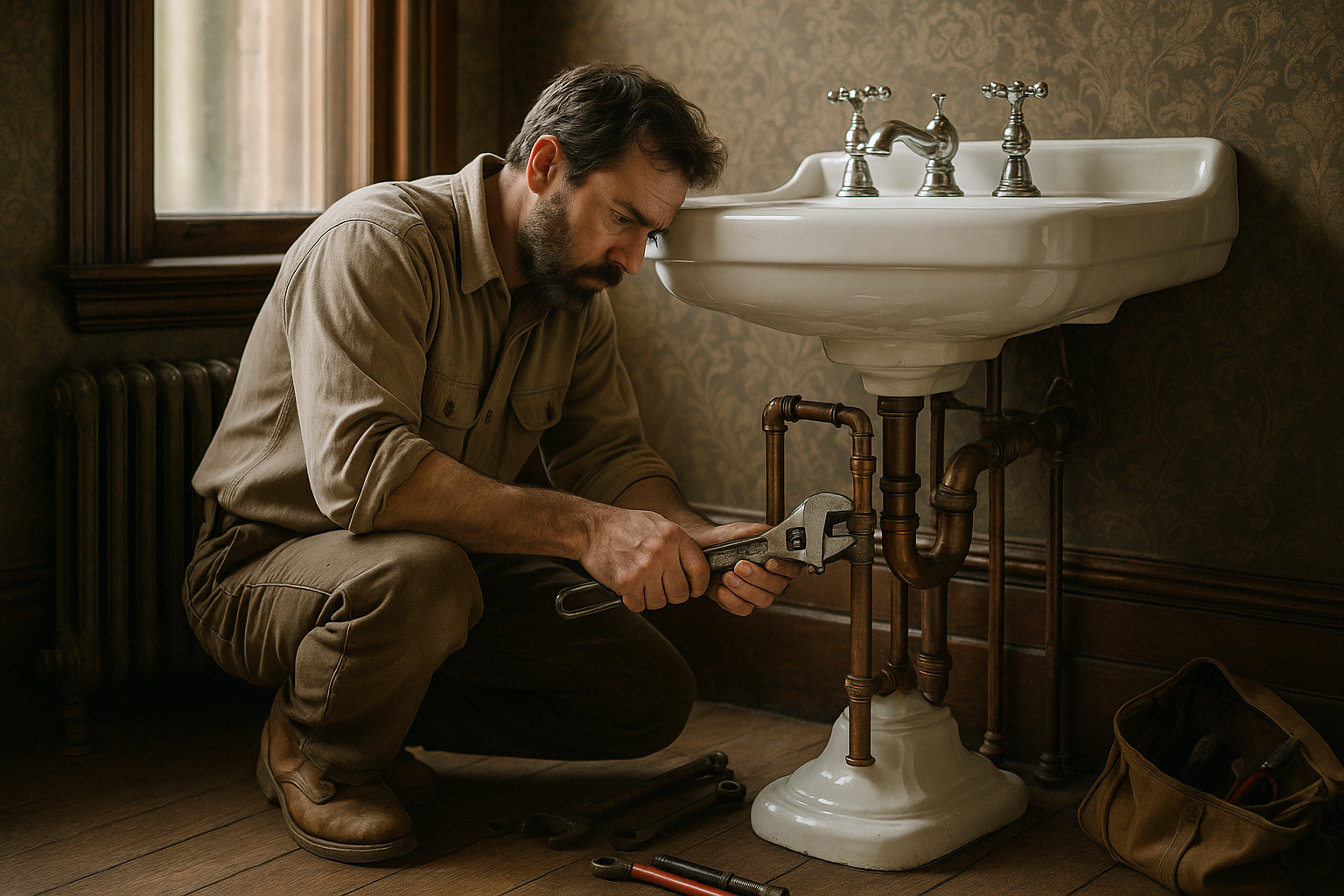
None of this means living without modern comfort. Reputable manufacturers now build period-style fixtures around contemporary plumbing standards, and even genuinely antique fixtures can usually be brought up to modern performance with careful, informed restoration rather than replacement. We've had our own original supply lines and valves serviced more than once over the years, always with the goal of keeping the original fixture rather than swapping it for something new. If you're weighing that decision in your own house, we go into much more detail in our companion article on plumbing repair and restoration in a Victorian home, which covers exactly how to balance history against modern-day function.
Common Mistakes to Avoid
After more than a decade of living with these fixtures, a few mistakes come up again and again in Victorian bathroom projects:
• Concealing plumbing that should be exposed. Boxing in supply lines or a shower riser to look “clean” erases one of the most authentic visual signatures of the era.
• Mixing finishes carelessly. Polished chrome faucets next to oil-rubbed bronze hardware next to brass towel bars reads as mismatched, not curated. Pick one metal family and stay close to it throughout the room.
• Choosing the wrong tile scale. Large-format modern tile, however elegant, rarely reads as Victorian. Small-format hexagon, penny, or encaustic tile does the job that big-format tile cannot.
• Treating the toilet tank as an afterthought. A modern low-profile toilet in an otherwise period-correct room breaks the illusion instantly. If budget only stretches to one showpiece fixture, many restorers — us included — would argue it should be the high-tank toilet or the tub, not the sink.
Frequently Asked Questions About Victorian Bathroom Fixtures
What is a high-tank toilet, and does it still work well today?
A high-tank (or high-level) toilet mounts its water cistern near the ceiling and is flushed with a pull chain, using gravity to create flushing force. A properly maintained original, like the one in our own 1889 house, flushes as effectively today as it did over a century ago.
What kind of tub is considered authentically Victorian?
A freestanding cast-iron clawfoot tub, in either the roll-top or slipper silhouette, with a porcelain enamel interior and ball-and-claw feet in brass, chrome, or porcelain, is the most historically accurate choice.
Should bathroom plumbing be hidden or exposed in a Victorian-style bathroom?
Exposed. Original Victorian bathrooms displayed their supply lines, valves, and shower risers as polished nickel or brass fittings rather than concealing them behind walls, which is exactly how the plumbing in our own house is finished.
What's the most authentic flooring for a Victorian bathroom?
Small-format tile — black-and-white hexagons, penny tile, or patterned encaustic tile — rather than large-format modern tile. Our tile looks period correct.
Is it better to buy antique or reproduction Victorian fixtures?
Both are valid choices. Genuine antiques offer unmatched authenticity and weight but require careful sourcing and maintenance; well-made reproductions meet modern plumbing codes and come with warranties while still capturing the look. Choose based on your budget, timeline, and whether you're restoring a historic property or building the aesthetic from scratch.
A Room Worth Seeing in Person
We could write ten times this much about the bathrooms in our house — we haven't even touched the story of the original medicine cabinet in the third-floor bath, or the year we spent tracking down the right nickel finish for a replacement valve. But the short version is this: everything above comes from a house we actually live in, not a showroom we visited once. If you're restoring or designing a Victorian bathroom of your own and want to see these fixtures the way we describe them, rather than only in a photograph, our home and gallery are open to visitors in Bedford, Pennsylvania.
That home, the Barclay House, is also where Bedford Fine Art Gallery lives. It's a natural pairing, in our experience — the same eye for period-correct craftsmanship that draws people to an original clawfoot tub or a high-tank pull-chain toilet is the eye that falls in love with an original nineteenth-century oil painting hanging on the wall just down the hall. A Victorian bathroom restores the bones of the era; original fine art restores its soul. If you're building a Victorian home, room by room, we'd genuinely love to help with both.