Explore the rich history and modern revivals of Victorian wallpaper, blending timeless designs with contemporary aesthetics for stunning interior decor.
Wallpaper has long played a vital role in interior decoration, serving not just as a backdrop to daily life but as an expression of personal taste, status, and cultural values. Among the most iconic and influential styles in wallpaper history is that of the Victorian era. Rich in detail, symbolism, and craftsmanship, Victorian wallpaper defined a generation of domestic aesthetics, and it continues to inspire homeowners, designers, and preservationists today.
In this guide, we trace the history of Victorian wallpaper, break down its major styles and signature motifs, explain how Victorian walls were organized, and show you how to bring these designs into your own home, whether you are restoring a 19th-century house or simply love the drama of historic pattern. Along the way, we will point you to our guide to the top Victorian wallpaper patterns and our deeper look at pattern and texture in Victorian interiors.
The Allure of Victorian Wallpaper
Victorian wallpaper was characterized by its complexity, opulence, and deeply symbolic motifs. In a time of rapid industrialization and expanding British colonial influence, wallpaper became an accessible form of art for the growing middle class. Where earlier generations had relied on expensive hand-painted panels, silk hangings, or imported Chinese papers, Victorian households could now cover an entire parlor in richly patterned paper at a fraction of the cost.
The introduction of mass production through machines such as the surface printing press allowed intricate designs to be more widely available. Suddenly, even modest homes could display the same sense of refinement once reserved for the wealthy. Common features of Victorian wallpaper included:
• Floral and botanical motifs: Inspired by nature, these designs often showcased roses, lilies, ivy, ferns, and exotic plants, influenced in part by the Arts and Crafts movement.
• Gothic and classical patterns: Arches, trellises, and symmetrical scrollwork echoed the architecture and ornamentation of earlier European styles.
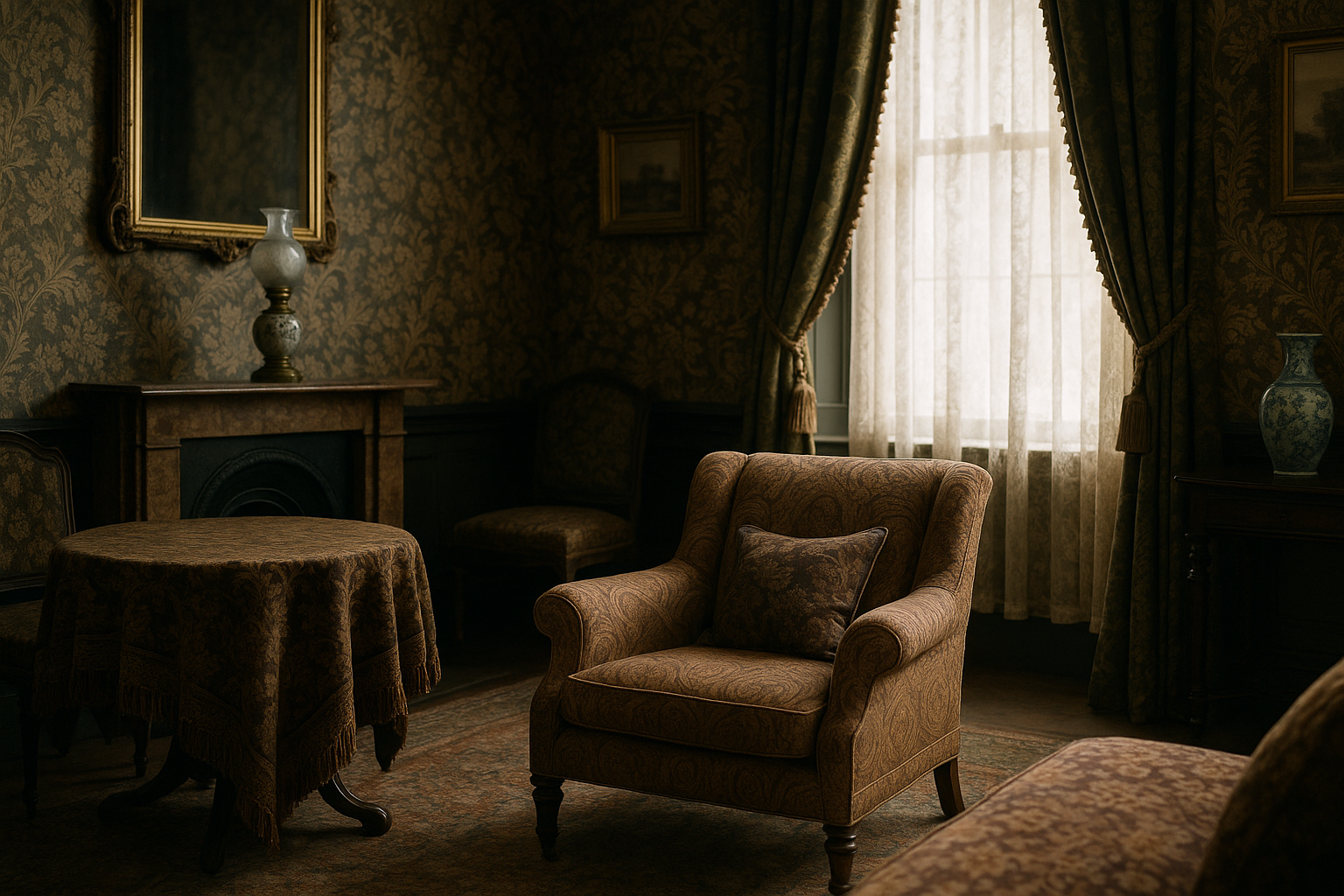
• Rich color palettes: Deep reds, forest greens, golds, and royal blues created a dramatic effect, well suited to the heavily furnished and dimly lit Victorian home.
• Layered design philosophy: Walls were often divided into three parts (dado, field, and frieze), each featuring different but coordinating patterns.
Prominent designers such as William Morris elevated wallpaper to a fine art, rejecting industrialized methods in favor of hand-crafted production and medieval-inspired designs. His work remains some of the most recognized and replicated Victorian wallpaper to this day.
A Brief History of Victorian Wallpaper
From Luxury Good to Household Staple
Before the Victorian age, wallpaper was largely a luxury. Sheets were printed or painted by hand, pasted together in short lengths, and taxed by the government. Two developments changed everything. First, the excise duty on wallpaper was abolished in 1836, which lowered prices and encouraged demand. Second, new printing technology made it possible to produce paper in long continuous rolls. Cylinder and surface-printing machines, which came into commercial use in the 1840s, could print multiple colors far faster than a craftsman could with hand blocks.
The results were dramatic. By the middle of the century, wallpaper was no longer a status symbol reserved for grand houses; it was a standard part of middle-class décor, found in front parlors, dining rooms, bedrooms, and even hallways. Manufacturers competed to offer ever more elaborate designs, and the market exploded with choices.
The Reform Movement and the Rise of Design Theory
Not everyone admired the machine-made excess that flooded Victorian homes. Critics argued that many mass-produced papers were garish, overly realistic, and poorly suited to a flat wall. Reformers such as Owen Jones, whose 1856 book The Grammar of Ornament became hugely influential, and Christopher Dresser argued that wall patterns should be flat, stylized, and geometric rather than imitations of three-dimensional objects. In Britain, A. W. N. Pugin had already championed Gothic Revival designs rooted in medieval ornament.
In America, Charles Eastlake's Hints on Household Taste (1868) shaped how middle-class families thought about interiors. His preference for honest materials and carefully designed patterns encouraged a new generation of American wallpaper manufacturers and decorators to rethink their designs. The result was a rich and often competing mix of styles that makes the Victorian period so fascinating to study.
Major Victorian Wallpaper Styles and Motifs
Victorian wallpaper was never a single style. The 63 years of Queen Victoria's reign (1837 to 1901) saw several distinct waves of fashion, each leaving its mark on the walls of the era. Understanding these styles will help you choose a pattern that feels authentic to your home.
Early Victorian: Naturalistic Florals and Rococo Revival
In the early decades, wallpaper favored lush, realistic bouquets, cabbage roses, and swirling Rococo-inspired scrolls. Colors were often bright and bold, and designs sometimes included shading to create a three-dimensional effect. Although later reformers criticized this approach, these florals remain among the most beloved Victorian patterns and are still widely reproduced.
Gothic Revival Wallpaper
Gothic Revival designs drew on medieval architecture, with pointed arches, quatrefoils, heraldic emblems, and stylized foliage. Pugin's wallpapers, famously associated with the Palace of Westminster, set the standard for the style. Gothic patterns work especially well in halls, libraries, and studies, where their dignified, architectural quality adds a sense of gravity.
Arts and Crafts Wallpaper and William Morris
No discussion of Victorian wallpaper is complete without William Morris. His first wallpaper design, Trellis, was created in the early 1860s, and his firm went on to produce hundreds of patterns, including Daisy, Fruit, Willow Bough, and Strawberry Thief. Morris believed that beauty should be part of everyday life and that designs should draw on observation of real plants while remaining flat and rhythmic on the wall. His wallpapers were printed by hand from carved wooden blocks, using natural dyes and pigments, a labor-intensive approach that set them apart from the machine-made papers of the day.
The Arts and Crafts movement that grew from Morris's ideas valued handwork, honest materials, and the beauty of the natural world. Its influence stretched well beyond Britain, shaping American interiors well into the early twentieth century.
Aesthetic Movement and Anglo-Japanese Designs
In the 1870s and 1880s, the Aesthetic Movement introduced a more refined, art-for-art's-sake approach. Designers such as Walter Crane, Bruce Talbert, and Christopher Dresser created wallpapers with sunflowers, peacock feathers, bamboo, cranes, and geometric arrangements inspired by Japanese art. Japan had recently opened to Western trade, and its asymmetry, simplicity, and love of nature seemed fresh and modern. These papers often used softer, more muted colors, with olive greens, ochres, and dusty blues taking the place of earlier bright tones.
Embossed Wall Coverings: Lincrusta and Anaglypta
Not all Victorian wallcoverings were flat printed paper. Lincrusta, invented by Frederick Walton in 1877, was a durable, embossed material made from linseed oil that could be painted, glazed, and used in high-traffic areas. A few years later, Anaglypta, a lighter embossed paper-based product, offered a more affordable alternative. Both were commonly used on dados, ceilings, and in hallways, where they imitated carved plaster, wood, and even leather. Both remain available today and are especially popular among those restoring period homes. You can learn more in our glossary entries for Lincrusta and Anaglypta.
Scenic and Monochrome Papers
Some wealthy Victorian households continued the tradition of scenic wallpaper, with panoramic landscapes printed in many colors or in monochrome. Monochrome designs in tones of a single color, a technique related to grisaille, created a subtle, sculptural effect that was often used in formal spaces.
How Victorian Walls Were Organized: Dado, Fill, and Frieze
One of the most distinctive features of Victorian wall decoration is the way walls were divided into horizontal bands. Rather than covering a wall with a single pattern from floor to ceiling, Victorian decorators treated the wall like a classical column, with a base, a shaft, and a capital:
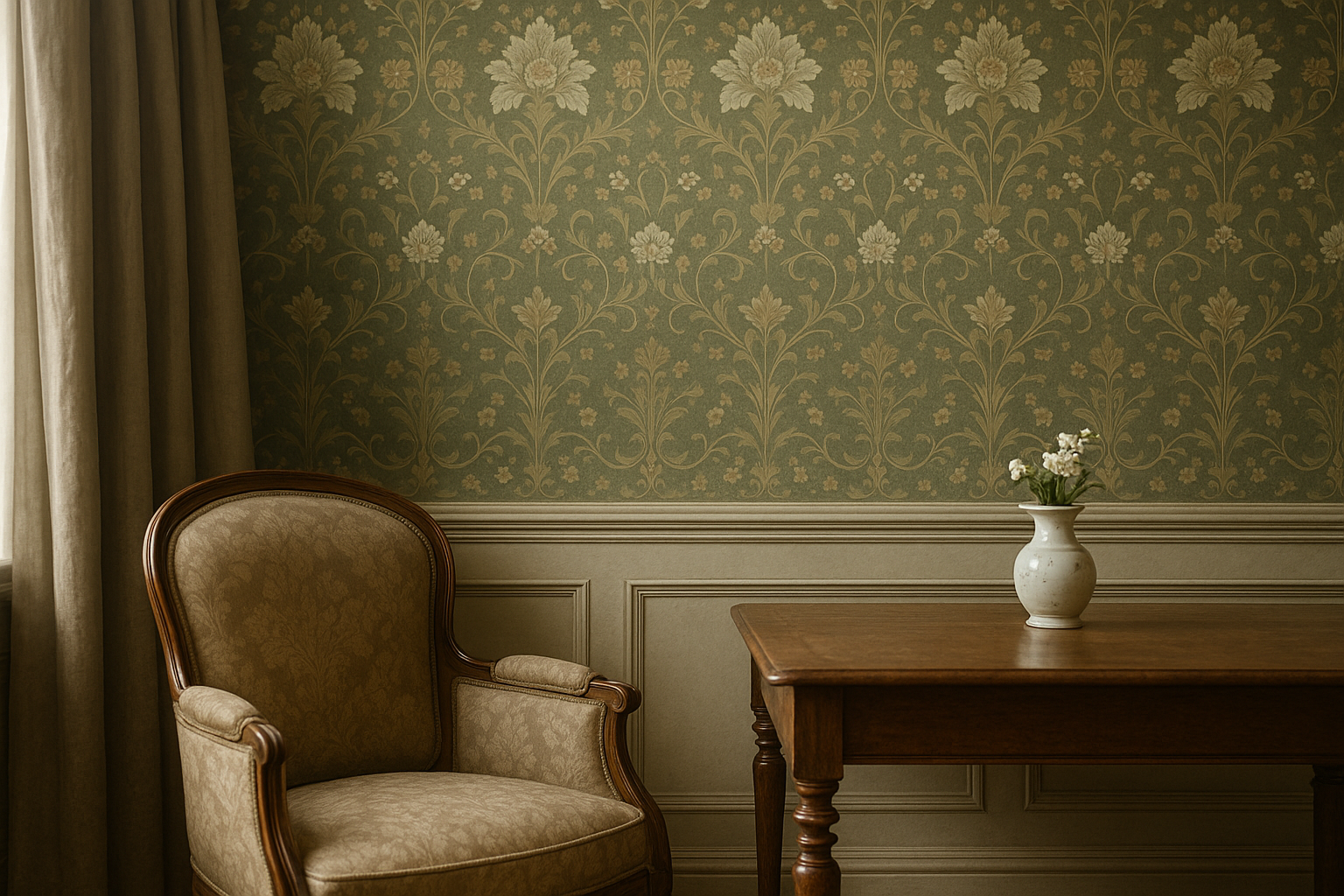
• Dado: The lower portion of the wall, usually about one-third of the height, protecting plaster from furniture and scuffs. It was often finished with wainscoting, Lincrusta, or a darker, heavier pattern.
• Fill (or field): The large central area of the wall, covered with the main wallpaper pattern. This is where florals, stripes, or damask-style designs usually appeared.
• Frieze: The upper band beneath the ceiling, often a decorative border with a repeating pattern or a continuous landscape or foliage design.
The divisions were usually separated by moldings such as a chair rail and a picture rail. This layered approach allowed decorators to mix patterns confidently, with each band coordinating through color or theme. If you are restoring a period home, recreating this three-part arrangement is one of the easiest ways to make wallpaper look historically correct. It also happens to be a practical solution for modern rooms: the lower wall can take on durable paint or paneling while the upper wall carries the pattern.
Victorian Wallpaper Colors: The Rich Palette of the Era
The color schemes of Victorian wallpaper changed over the course of the century, but certain hues are strongly associated with the period. Deep burgundy and crimson reds appeared in dining rooms and parlors, where they added warmth and drama by candlelight and gaslight. Forest and olive greens suited libraries and halls, while golds and ochres lent a glow to formal spaces. Royal blues, plum purples, and earthy browns also featured prominently, often combined with metallic accents.
Later in the century, tastes shifted toward the softer, more subdued palettes championed by the Aesthetic and Arts and Crafts movements: sage green, muted teal, dusty rose, and cream. When choosing a color today, think about the natural light in your room. Dark, saturated Victorian colors can make a bright, south-facing room feel cozy and enveloping, while in a small, dim room they may feel heavy unless balanced with lighter woodwork, mirrors, and well-placed lighting.
The Dark Side of Victorian Wallpaper: Arsenic Greens
No honest account of Victorian wallpaper can ignore its darker chapter. Many Victorian papers were colored with arsenic-based pigments, particularly vivid greens such as Scheele's Green and Paris Green. In damp conditions, these papers could release toxic compounds, and concerns about household poisoning spread through the second half of the century. William Morris himself, whose family had business interests connected to arsenic mining, eventually became an outspoken critic of arsenical dyes, and by the 1870s and 1880s many manufacturers had begun to move away from them.
If you own an original Victorian house with surviving wallpaper layers, this history is a good reason to treat old paper with care. Avoid sanding or aggressively scraping unknown historic layers, and consider having samples professionally tested before undertaking major removal work. The good news is that modern reproductions use safe, non-toxic inks, allowing you to enjoy the look of those intense greens without the risk.
Modern Interpretations: Victorian Style Reimagined
Contemporary designers and manufacturers have tapped into the timeless appeal of Victorian wallpaper, creating modern versions that honor the aesthetic while adapting it to current needs. Here is how:
• Digitally printed reproductions: High-resolution scans of original Victorian wallpapers can now be reproduced with incredible fidelity. Companies like Morris & Co., Cole & Son, and Little Greene specialize in offering authentic reprints of historic patterns. In the United States, makers such as Bradbury & Bradbury and Adelphi Paper Hangings have built reputations for historically accurate designs.
• Eco-friendly materials: Where traditional Victorian wallpaper might have used toxic pigments or lead-based paints, modern versions rely on non-toxic inks and sustainable paper or vinyl substrates.
• Simplified or stylized designs: While some reproductions aim for authenticity, others reinterpret Victorian motifs with modern minimalism, such as botanical prints in monochrome or pastel palettes.
• Durability and functionality: Today's wallpapers often feature washable surfaces, peel-and-stick options, and moisture-resistant properties, making them more versatile and user-friendly than their 19th-century counterparts.
• Mixing old and new: Designers often combine Victorian-style wallpaper with contemporary furniture, clean architectural lines, or minimalist accessories, creating an eclectic aesthetic that bridges centuries.
This flexibility is a major reason for the style's resurgence. Victorian-inspired wallpaper no longer needs to be a full historical reenactment. A single bold floral can anchor a modern room, and a stylized trellis in a muted tone can bring pattern into a space without the visual weight of a full period scheme.
Where to Use Victorian-Inspired Wallpaper Today
Victorian-style wallpaper is particularly effective in a number of settings:
• Accent walls: A dramatic Morris print can add depth and historical charm to a single feature wall, such as behind a bed, a sofa, or a fireplace.
• Powder rooms and entryways: Smaller spaces benefit from the visual richness of traditional patterns without overwhelming the senses. These are also the best places to experiment with bold color.
• Heritage home restorations: Those restoring Victorian-era homes often use historically accurate wallpapers to maintain architectural integrity, ideally following the original dado, fill, and frieze arrangement.
• Dining rooms and libraries: Deep, saturated colors and rich patterns create an intimate atmosphere for gathering and reading.
• Ceilings: Victorians often decorated ceilings with patterned paper or embossed coverings. A subtle pattern overhead can make a room feel like a jewel box.
If you are new to pattern, start small. A single wall or a small room lets you test the effect before committing to a larger project. For more ideas about creating a cohesive period look throughout your home, see our article on the top 5 decorating ideas for your Victorian home.
How to Choose and Install Victorian Wallpaper
Match the Pattern to the Room
Scale matters. Large, bold patterns suit high ceilings and generous rooms, while smaller, tighter repeats work well in compact spaces. Consider the architecture of your home as well: a Gothic Revival pattern may feel most natural in a house with pointed-arch details, while Aesthetic Movement designs suit homes with more delicate woodwork.
Consider Authenticity vs. Practicality
Decide how closely you want to follow historical precedent. A museum-quality restoration may call for hand-blocked or screen-printed papers and traditional paste. A family home with children and pets might do better with a washable vinyl or a robust non-woven paper that offers the Victorian look with fewer worries.
Prepare the Walls Properly
Good preparation is the secret to a lasting finish. Repair cracks, remove loose paint, and apply a quality primer or sizing coat. Old plaster walls can be uneven, so a lining paper can help create a smoother surface for the final layer. Because many Victorian homes have lime plaster, use compatible materials and avoid trapping moisture behind impermeable coatings.
Hang with Care
Pay close attention to pattern repeats and plan your layout so that seams fall in inconspicuous places. For expensive or hand-printed paper, consider hiring a professional paperhanger, as mistakes can be costly. If you are using a border or frieze, install it after the main field so you can adjust the height and align it with picture rails and moldings.
Pairing Victorian Wallpaper with Furniture, Lighting, and Art
Wallpaper is only one part of the story. Victorian interiors were layered, with heavy drapery, patterned rugs, carved furniture, and a generous amount of artwork on the walls. To make wallpaper feel at home, consider surrounding it with period-appropriate elements: antique wood furniture, brass or glass lighting, and framed paintings with ornate gilded frames.
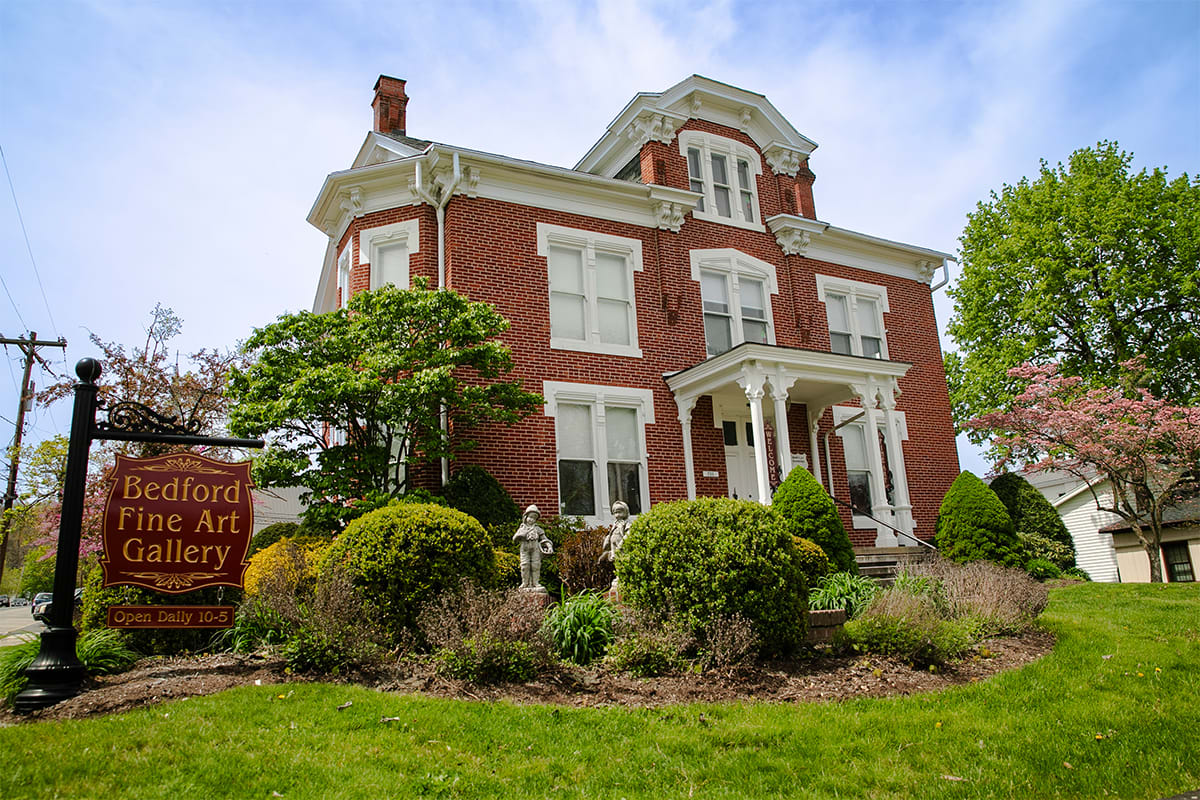
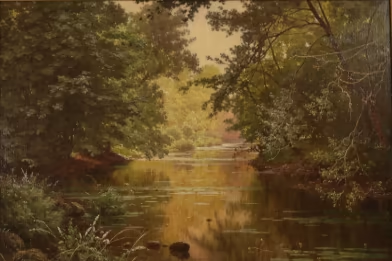
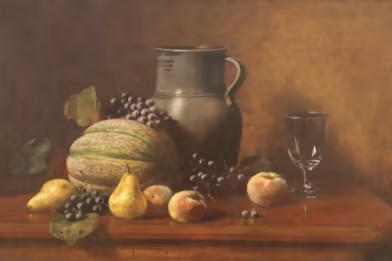
Original fine art is a natural companion to patterned walls. Victorian homes were famous for their gallery-style hangs, with paintings arranged salon-style and sometimes suspended from picture rails with cords. A landscape or still life with a rich gold frame can stand out beautifully against a deep green or burgundy paper. If you are looking for original 19th-century art to complement your decor, we invite you to browse the collection at Bedford Fine Art Gallery.
A few simple rules help balance a patterned room. Choose one dominant pattern and let others play a supporting role. Repeat colors from the wallpaper in textiles and accessories. Keep the ceiling and woodwork lighter or more neutral if the walls are dark. And allow some breathing room, since even the most ornate Victorian room had solid surfaces and quiet areas for the eye to rest.
Frequently Asked Questions About Victorian Wallpaper
What is Victorian wallpaper known for?
Victorian wallpaper is known for its ornate patterns, rich colors, and symbolic motifs. Floral designs, Gothic motifs, and nature-inspired patterns were especially popular, and the introduction of machine printing made these designs affordable for the growing middle class.
Who was the most famous Victorian wallpaper designer?
William Morris is the most celebrated name in Victorian wallpaper. Working with his firm, Morris & Co., he created patterns such as Trellis, Willow Bough, and Strawberry Thief that remain in production today. Other influential designers include A. W. N. Pugin, Owen Jones, Christopher Dresser, and Walter Crane.
What colors were common in Victorian wallpaper?
Deep reds, forest greens, golds, royal blues, and rich browns were typical, especially in the early and middle Victorian years. Later in the century, softer colors such as sage green, dusty rose, and cream became popular under the influence of the Aesthetic and Arts and Crafts movements.
Can I still buy authentic Victorian wallpaper?
Yes. Many companies produce faithful reproductions of historic Victorian designs, some using traditional methods such as block printing or screen printing. Morris & Co., Cole & Son, Little Greene, Bradbury & Bradbury, and Adelphi Paper Hangings are among the best-known sources.
Is Victorian wallpaper still in style?
Absolutely. Victorian-inspired florals, botanicals, and trellis patterns are enjoying a major revival, appearing in everything from traditional restorations to modern, eclectic interiors. Their appeal lies in their craftsmanship, depth, and ability to make a room feel warm and personal.
What is Lincrusta, and is it still available?
Lincrusta is a durable, embossed wall covering invented in 1877 and made from linseed oil. It was popular for dados and hallways in Victorian homes and is still manufactured today, making it a favorite for period restorations.
Conclusion: A Legacy of Pattern, Craft, and Story
Victorian wallpaper, with its lush patterns and historical depth, offers more than just decoration. It tells a story of cultural values, artistic aspirations, and technological progress. Today's designers pay homage to this legacy through both faithful reproductions and innovative reimaginings. Whether you seek the authenticity of a 19th-century parlor or a contemporary twist on floral opulence, Victorian-inspired wallpaper offers a rich tapestry of options to transform any space.
In merging the old with the new, modern wallpaper not only mimics the visual charm of the Victorian era but reintroduces the spirit of artistry, craftsmanship, and storytelling that made those designs timeless in the first place. Explore more in our Victorian decor library, and discover the full vocabulary of the period in our Victorian glossary.