Why a Victorian Garden Still Captivates Homeowners Today
A Victorian garden is more than a collection of flowers. It is a designed landscape, built the way a painter builds a canvas — with layers of color, texture, and light that change through the seasons and through the hours of the day. For homeowners restoring a 19th-century property, or for anyone who simply loves the romance of an old-fashioned garden, understanding the history behind Victorian garden design makes it far easier to plant one that feels authentic rather than accidental.
This guide walks through the history of the 1880s Victorian garden, the plants and ornaments that defined the style, and how to adapt that philosophy to a modern yard — including a few lessons from our own Victorian Italianate home here in Bedford, Pennsylvania, where the original owners were once known throughout town for their gardens.
A Short History of the Victorian Garden
Before the Victorian era, wealthy estates favored sweeping, naturalistic landscapes meant to look untouched by human hands. That changed dramatically by the 1880s. The Industrial Revolution had put new tools and new plants within reach of the average homeowner. The mechanical lawnmower made a smooth, manicured lawn achievable for the middle class for the first time, and advances in glasshouse heating allowed nurseries to mass-propagate exotic plants that had once been reserved for the very wealthy.
Out of this shift came what garden historians call the “Gardenesque” style: a Victorian garden philosophy that celebrated botanical variety and visible human control over nature. A garden was no longer just a backdrop to a home — it was a designed space and a status symbol, one that reflected a family's wealth, taste, and horticultural knowledge to every neighbor who passed by.
The Defining Elements of an 1880s Garden
Carpet Bedding, the Signature Victorian Garden Feature
Nothing says Victorian garden quite like carpet bedding, also called mosaiculture. Gardeners of the 1880s arranged low, densely growing plants into intricate geometric patterns that mimicked woven carpets — circles, stars, crescents, even family initials, set into a manicured lawn and filled with contrasting foliage. Maintaining these designs was demanding work, requiring daily pinching and shaping to keep every line crisp.
The Rise of the Immaculate Lawn
The front lawn as we know it today became a cultural fixture during this era. Affordable push-mowers meant homeowners could finally maintain the smooth, uniform green that set off both the carpet beds and the architecture of the house itself. Foundation plantings — the shrubs we now expect to see hugging the base of every house — were only just beginning to appear. Victorians used vines and carefully placed shrubs to soften the transition between heavy brick or stone masonry and the lawn, a detail that still reads as instantly Victorian today.
Ornaments, Fencing, and Hardscaping
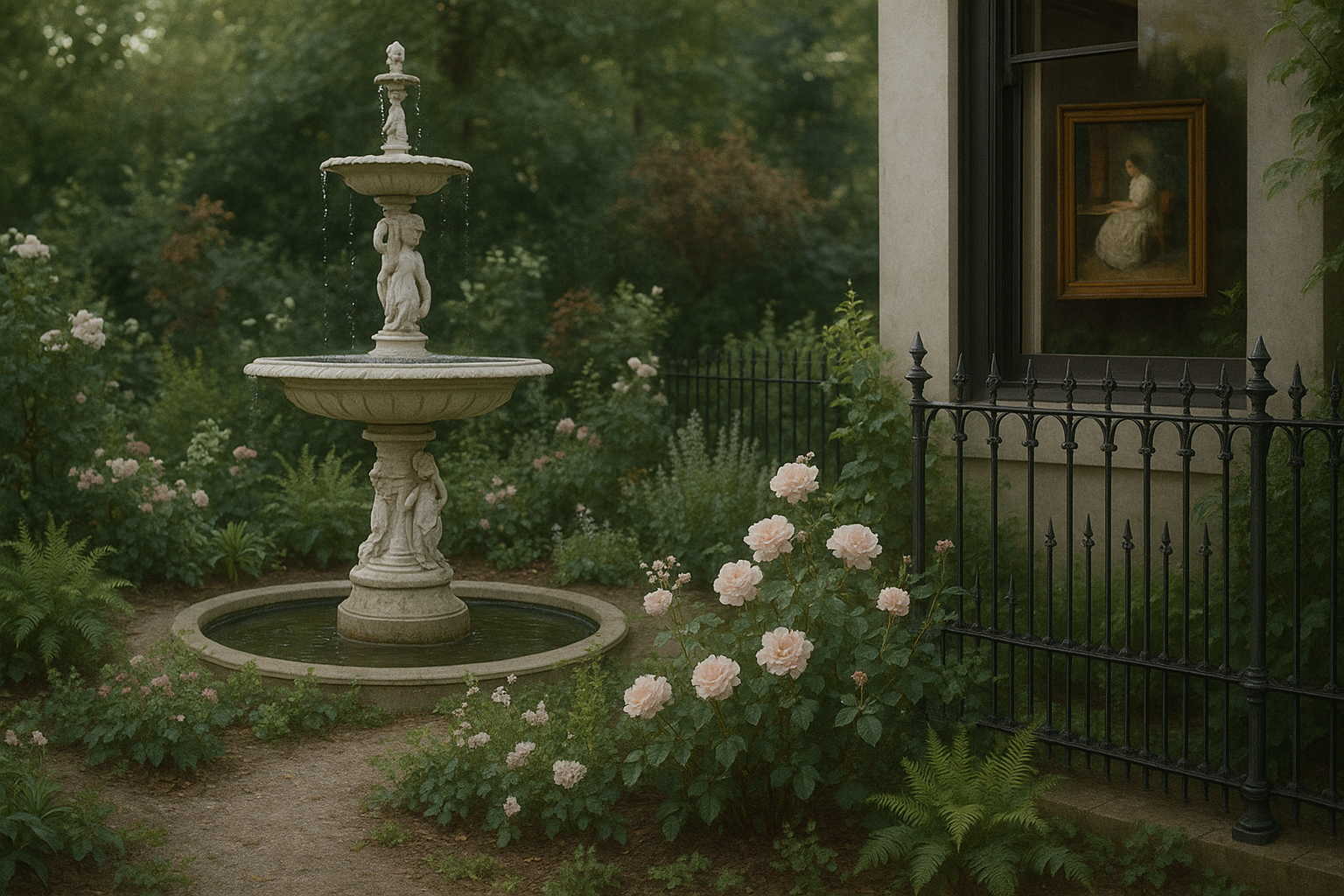
A Victorian garden was meant to be furnished almost like a room. Cast-iron benches, classical stone urns trailing with vines, sundials, birdbaths, and wooden gazebos were all popular. Wrought iron or cast-iron fencing often bordered the property line, serving the dual purpose of security and quiet display of wealth.
Plants That Define the Victorian Garden Palette
To recreate the 1880s horticultural palette in your own Victorian garden, look for plants with bold color, exotic form, or a sense of old-fashioned romance.
Foliage and Bedding Plants
• Coleus, Dusty Miller, Sweet Alyssum, and Wax Begonias were the workhorses of Victorian carpet bedding, prized for holding a crisp line and a strong color.
• Cannas and Elephant Ears often anchored the center of a circular bed as a tall, dramatic focal point.
Vines and Climbers
• Wisteria, Clematis, English Ivy, and Morning Glories were trained up trellises and brickwork, softening hard architectural lines the Victorian way.
Shrubs
• Lilacs, Hydrangeas (especially mophead varieties), Bridal Wreath Spirea, and Mock Orange were valued for fragrance and for the abundance of their spring and summer blooms.
Trees
• The Weeping Willow was the great symbol of Victorian sentimentality, while in milder climates the exotic Monkey Puzzle Tree served as a front-lawn centerpiece.
Heritage Roses
No Victorian garden was complete without roses, and the 1880s favored heavily scented, double blooms rather than the modern Hybrid Tea rose we know today. Bourbon roses such as 'Zephirine Drouhin' and Hybrid Perpetuals such as 'Baronne Prevost' or 'Ferdinand Pichard' filled Victorian rose gardens with fragrance rather than the tidy, low-scent blooms bred for the modern florist trade.
Bringing an 1880s Victorian Garden Into a Modern Yard
Authentic Victorian gardens required an enormous amount of labor — the daily pinching alone to keep a carpet bed's geometry sharp is more than most modern homeowners can take on. The good news is that you do not need to replicate every detail to capture the feeling of a Victorian garden. Focus on the spirit of the era rather than a museum-exact reproduction.
• Simplify the bedding. Replace an elaborate mosaic with a single circular bed featuring a tall central plant, such as a Canna lily, ringed by Begonias and Dusty Miller.
• Embrace urns. Flank your front steps with classical cast-iron or stone urns planted with trailing ivy, colorful annuals, and heirloom roses that would have perfumed the air in 1885.
• Layer height, color, and texture. Mix annuals and perennials with a few deciduous or evergreen shrubs as anchors, so the garden holds interest across every season rather than peaking for only a few weeks.
• Plan for light. Study how sunlight moves across your property from dawn to sunset. The most memorable Victorian-style plantings pair color combinations to the way the light actually falls on them.
A Victorian Garden Story From Our Own Backyard
As much as we love the history, nothing teaches you a Victorian garden faster than actually tending one. My wife, Joan, has spent years restoring the grounds around our own home, a brick Victorian Italianate with a two-story bay window built in 1889. Her approach is a wonderful case study in how to apply 1880s garden philosophy to a real, modern-day landscape — so I'll let her explain it in her own words.
Painting With Plants: Joan's Approach to Garden Design
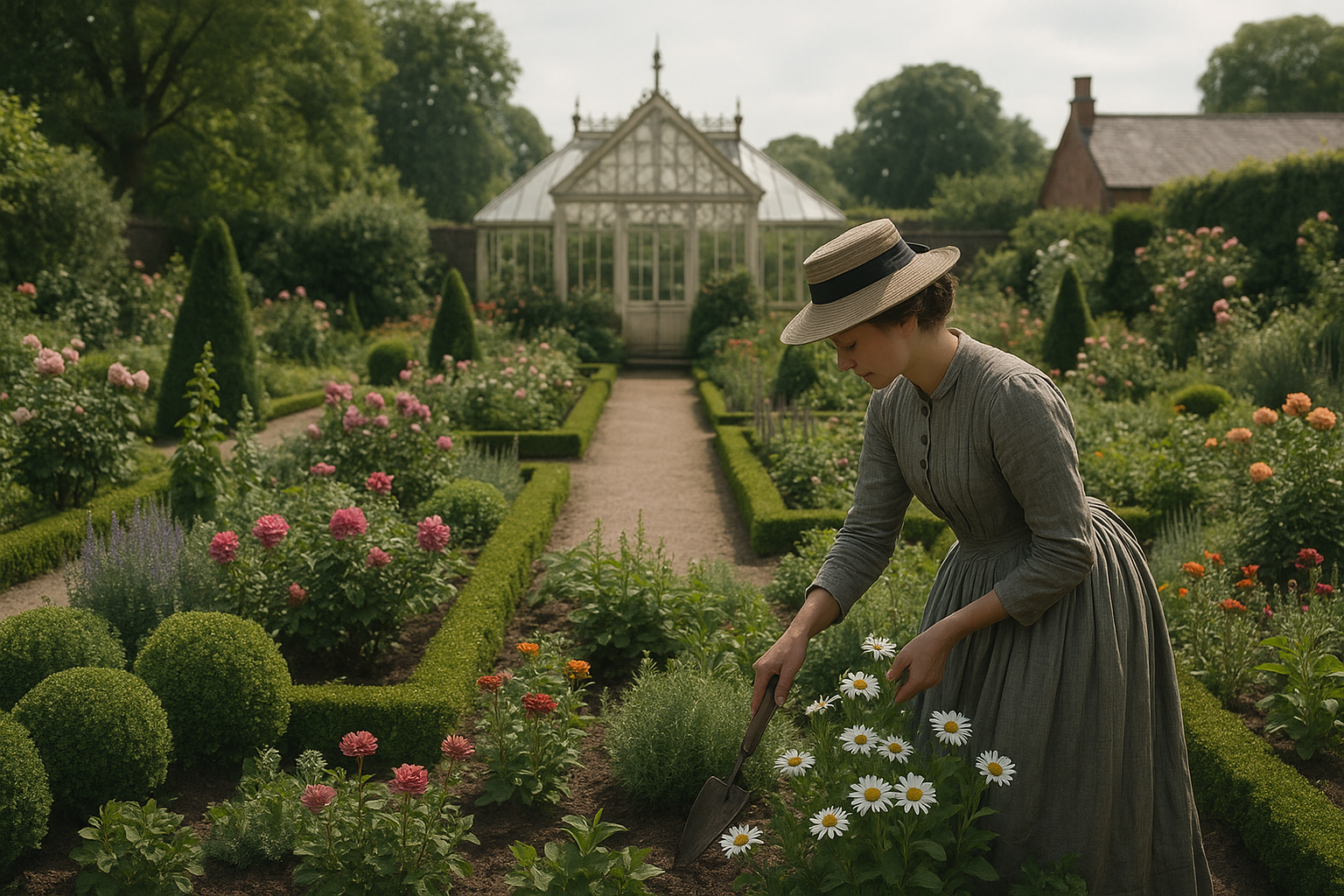
“Just like the Victorians, I love gardens. Unlike many Victorian gardens with their mazes and topiaries, my gardens are not ‘over-the-top.’ I love planning out a garden, analogous to making a drawing before applying the paint to a canvas. Just as light is important to an artist, it is important to planning a garden; as the sun moves from dawn to sunset, the light varies, and there are marvelous planting combinations you can use to compose your own unique gardens.”
“In my gardens I include plants of varying height, color, and texture, mixes of annuals and perennials, with some perennial or deciduous shrubs as anchors. I have tulips and other bulbs for spots of interest during the spring, when the garden is just beginning to awaken from its winter hibernation.”
A House With Its Own Garden History
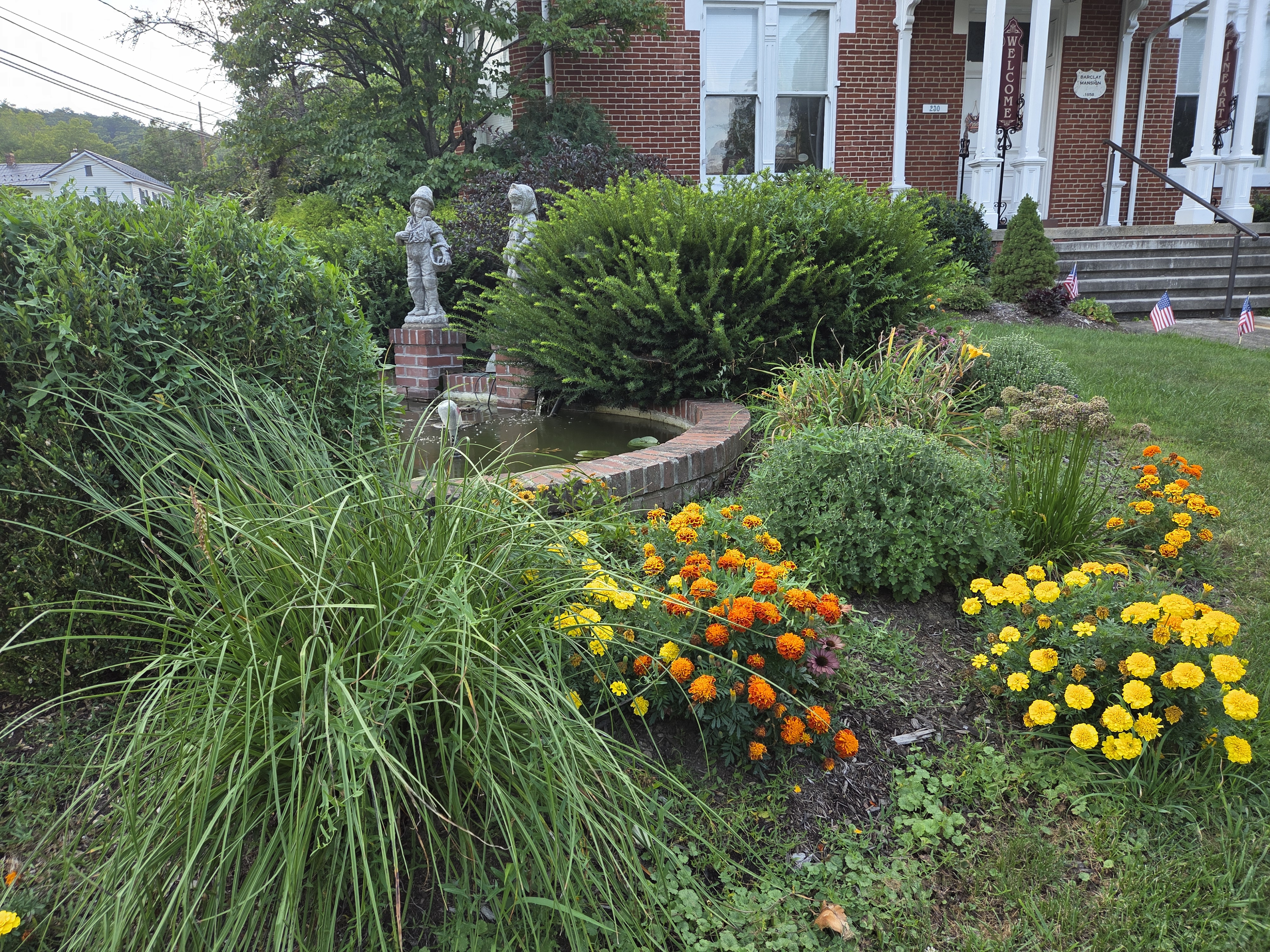
Our house is a brick Victorian Italianate with a two-story bay window, built in 1889. When we bought it, small gardens and an ornamental fish pond, installed in 1984, were already in place, though the pond, decorated with two small concrete statues, was in poor condition. Joan left much of the base plantings around the pond and the house in place — evergreen arborvitae, rhododendrons, and boxwoods — and began building on them to create a garden with multi-season interest.
We later discovered that the Barclay family, who lived in the house from 1889 until the mid-1960s, were known around town for their gardens. It felt fitting to carry that tradition forward, even though much of the ground once occupied by the original Barclay flower beds is long gone.
Restoring the Pond and Building the Beds
Joan and I repaired the “post-Barclay” pond ourselves and added a fountain. Working with the pre-existing chrysanthemums, boxwoods, and other evergreens already on the property, Joan added tulips, lavender, bee balm, small perennial shrubs, and columbine, one of her favorite perennials. Her favorite annuals are marigolds and petunias, though she experiments with new varieties whenever the urge strikes her — which, she admits, happens more often than it probably should. She likes to think of it as a small ‘channeling’ of the Barclays who gardened there before her.
Porches and entryways get their own treatment too: urns and planters filled with coleus, begonias, caladiums, and, of course, more petunias — all classic choices for a Victorian-style container planting.
A Deeper Plant Palette for Sun and Shade
Depending on the light available in a given bed, Joan also works in alliums, ferns, hydrangeas, lungwort, bleeding hearts, coral bells, astilbe, hostas, and Jacob's ladder. Antique statuary and birdbaths are tucked throughout the garden as well, giving it a quiet hint of Victorian ambience without tipping into clutter. A raised herb garden supplies fresh herbs for the kitchen, a very practical nod to the working gardens Victorian households often kept behind their more decorative front beds.
Joan is currently planning two new gardens out of awkward, hard-to-mow areas around the house — one in sun, one in shade — reusing many of her favorite plants alongside a new addition: roses. As she puts it, you can't get much more Victorian than a rose garden. One nineteenth-century California artist even planted a showcase rose garden purely to have a steady supply of models for his floral still-life paintings; it became a local tourist attraction in its day, though sadly the home and garden were eventually razed and the site is now a parking lot — a reminder that even the grandest Victorian gardens need tending, and sometimes protecting, to survive.
The One Rule Every Victorian Garden Should Follow
If there is a single lesson worth taking from all of this, it's a warning as much as an inspiration. The Victorians were famous for filling their homes with tables and shelves crowded with bric-a-brac, and it is tempting to do the same thing outdoors with a garden. Resist it. A profusion of mismatched plants and clashing colors reads as clutter, not charm, and becomes a distraction rather than an attraction.
There's a practical reason to hold back as well. Overcrowded beds impede air flow, which invites snails, slugs, and fungal disease — problems that can undo months of careful planning in a single wet season. Think of your garden the way Joan thinks of hers: plan it like a painting, choose your palette with intention, and let each plant have enough room to be seen. Paint your landscape carefully, and it will reward you in every season.
Designing a Victorian Garden Season by Season
One of the quiet secrets of a great Victorian garden is that it was never designed to peak all at once. Victorian gardeners thought in successive waves of bloom, so that as one plant faded, another was just coming into its own. Planning your own Victorian garden around the seasons is one of the simplest ways to make it feel authentic year-round rather than for only a few weeks in June.
Spring: Waking the Garden
Spring is where a Victorian garden announces itself. Bulbs planted the previous autumn — tulips, daffodils, and other early risers — provide the first color while perennials are still gathering themselves underground. In shadier beds, bleeding hearts, lungwort, and early ferns unfurl alongside the bulbs, giving even a shaded Victorian garden real presence before the trees fully leaf out.
Summer: The Height of Abundance
By summer, a Victorian garden should be at its fullest. This is when the classic bedding annuals — marigolds, petunias, begonias, coleus, and caladiums — take over containers and border edges, while perennials such as bee balm, astilbe, coral bells, columbine, and hostas fill out the middle layers of a bed. Roses, if included, are typically at their most fragrant during this stretch, especially old Bourbon and Hybrid Perpetual varieties bred for scent over shelf life.
Autumn: Structure and Late Color
As summer annuals fade, the shrubs and evergreens that Victorian gardeners relied on as anchors — boxwoods, arborvitae, rhododendrons, and hydrangeas — carry the garden's structure into autumn. Chrysanthemums, a Victorian favorite still beloved today, provide a reliable burst of late-season color right as everything else begins to wind down.
Winter: The Bones of the Garden
A well-planned Victorian garden does not disappear in winter; it simply changes character. Evergreen shrubs, iron fencing, statuary, birdbaths, and a fountain or pond all become the visual anchors of the landscape once the perennials die back. This is also exactly why 1880s gardeners valued hardscaping and ornament so highly — a garden built only around flowers goes flat for half the year, while one built around structure and ornament as well as plants stays interesting even under snow.
Practical Design Tips for Planning Your Own Victorian Garden
Whether you are starting from bare ground or reworking an existing bed, a few practical habits separate a garden that reads as thoughtfully Victorian from one that simply looks busy.
• Sketch before you plant. Just as an artist drafts a composition before applying paint, sketch your bed on paper first, noting mature plant heights so nothing you plant this year gets swallowed by something you plant next year.
• Track the light for a full day. Watch how sun and shade move across your yard from morning to evening before committing to a plant list — a spot that looks sunny at noon may be shaded most of the afternoon.
• Anchor first, decorate second. Place your perennial or evergreen anchor shrubs first, then fill in around them with annuals and smaller perennials, rather than the other way around.
• Give every plant breathing room. Crowded beds might look full the first season, but poor air flow invites the slugs, snails, and fungal problems that undo a garden by midsummer.
• Repeat a color or plant through the yard. Victorian gardens achieved cohesion partly through repetition — the same variety of rose, or the same shade of foliage, reappearing in different beds ties a whole property together.
• Let ornament do some of the work. A single well-placed urn, birdbath, or piece of statuary can carry a bed through the weeks when nothing is in bloom, exactly as it did in the 1880s.
Quick-Reference: Victorian Garden Plant List
Use this list as a starting point when shopping for a Victorian-inspired garden, organized the way a 19th-century gardener might have thought about it — by role in the landscape.
• Carpet bedding & foliage: Coleus, Dusty Miller, Sweet Alyssum, Wax Begonias, Cannas, Elephant Ears
• Vines & climbers: Wisteria, Clematis, English Ivy, Morning Glories
• Shrubs: Lilacs, Hydrangeas, Bridal Wreath Spirea, Mock Orange, Rhododendrons, Boxwoods, Arborvitae
• Roses: Bourbon roses ('Zephirine Drouhin'), Hybrid Perpetuals ('Baronne Prevost', 'Ferdinand Pichard')
• Bulbs & spring interest: Tulips and other spring bulbs
• Perennials for sun: Lavender, bee balm, columbine, alliums, coral bells
• Perennials for shade: Ferns, lungwort, bleeding hearts, astilbe, hostas, Jacob's ladder
• Annuals & containers: Marigolds, petunias, coleus, begonias, caladiums
• Ornaments: Antique or reproduction statuary, birdbaths, cast-iron urns, sundials, fountains
Frequently Asked Questions About Victorian Garden Design
What makes a garden “Victorian”?
A Victorian garden typically combines a manicured lawn, structured beds with a mix of bold foliage and fragrant flowers, vines trained on the house or trellises, and period ornaments such as urns, birdbaths, statuary, and iron fencing. The overall effect is one of designed abundance rather than wild, untamed growth.
Do I need carpet bedding to have an authentic Victorian garden?
No. True carpet bedding is extremely labor-intensive and impractical for most modern homeowners. A single well-planned circular bed with a tall center plant and a ring of contrasting foliage captures the same spirit with a fraction of the maintenance.
What roses are the most historically accurate for an 1880s garden?
Bourbon roses and Hybrid Perpetuals, prized for their heavy fragrance and full, double blooms, were the roses of choice in the 1880s, well before the modern Hybrid Tea rose became popular in the 20th century.
How do I avoid making a Victorian garden look cluttered?
Choose a restrained color palette, give plants enough space for good air flow, and use height, texture, and repetition to create rhythm rather than piling on every plant you like at once. Let a few strong anchor shrubs or a single ornament act as a focal point in each bed.
Final Thoughts
A Victorian garden is really a philosophy as much as a plant list: layered, intentional, a little romantic, and always mindful of how light and season change what you see. Whether you're restoring the grounds of a genuine 19th-century home or simply want to bring a touch of Victorian charm to a modern yard, the same principles apply — plan with a painter's eye, choose plants that reward every season, and never let abundance tip into clutter.
For more on restoring an original Victorian home, from garden fountains and ironwork to period-correct architectural details, explore the rest of our Victorian Home Decor blog.
Written by Jerry and Joan Hawk — Victorian Home Decor, Bedford, Pennsylvania